
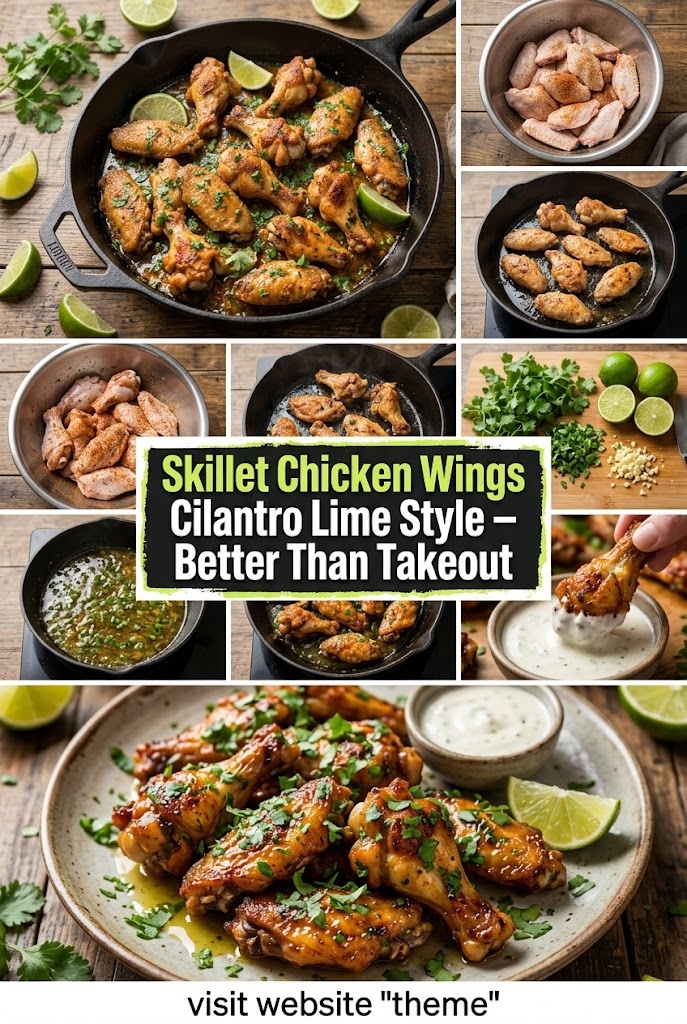
There is a specific kind of magic that happens in a heavy-bottomed skillet. While deep-frying has its place in the pantheon of comfort food, and air-frying offers a modern convenience, the skillet remains the undisputed champion of flavor development. When you take the humble chicken wing and marry it to the vibrant, zesty, and aromatic combination of fresh cilantro and lime, you aren’t just making a snack; you are creating a culinary masterpiece that rivals the best gastropubs in America.
Forget the soggy, over-sauced wings delivered in a cardboard box. This is about achieving that elusive “shatter-crunch” skin, succulent meat, and a glaze so bright it practically sings. This is the ultimate guide to Skillet Chicken Wings Cilantro Lime Style.
Why the Skillet Changes Everything
Most people assume that to get crispy wings, you need a vat of bubbling oil. This is a common misconception. The skillet—particularly a cast-iron or heavy stainless steel pan—allows for a process called “rendering.”
When you cook wings in a skillet, the fat under the skin slowly melts away, basting the meat as it cooks and frying the skin in its own natural juices. This results in a texture that is far more complex than deep-fried wings. You get those beautiful charred spots, a deep mahogany color, and a flavor profile that includes the “fond”—those delicious browned bits stuck to the bottom of the pan that form the base of our cilantro lime glaze.
The Anatomy of the Perfect Wing
Before we dive into the heat, we must understand the ingredient. Not all wings are created equal. When shopping for this recipe, look for “party wings” (already split into flats and drumettes) that are air-dried if possible.
- The Flat: Known for its two small bones and high skin-to-meat ratio, the flat is the crispy lover’s dream.
- The Drumette: This looks like a miniature drumstick. It’s meatier and holds onto the glaze exceptionally well.
- The Skin: This is where the magic happens. To get it “better than takeout” crispy, the skin must be bone-dry before it touches the pan.
The Flavor Profile: Why Cilantro and Lime?
The American palate has evolved. While Buffalo sauce will always be a classic, there is a growing craving for “bright” flavors. Cilantro and lime provide a “high note” that cuts through the richness of the chicken fat.
- Lime: Provides acidity. It breaks down the protein slightly and refreshes the palate, making you want to go back for “just one more wing” indefinitely.
- Cilantro: Adds an earthy, herbaceous, and slightly citrusy finish. It brings a garden-fresh quality to a dish that is traditionally heavy.
- The Supporting Cast: Garlic, honey (for balance), and a hint of cumin or chili flakes to provide a bridge between the citrus and the savory meat.
Ingredients You’ll Need
To achieve professional-grade results at home, quality matters. Here is your shopping list:
The Chicken
- 3 lbs Chicken Wings: Split into flats and drumettes.
- Kosher Salt: The coarse grains are better for drawing out moisture.
- Baking Powder (The Secret Ingredient): Just a teaspoon. The alkaline nature of baking powder breaks down the peptide bonds in the skin, allowing it to get extra bubbly and crisp.
The Cilantro Lime Glaze
- Fresh Cilantro: One large bunch. Use the leaves and the tender upper stems (the stems actually hold more flavor).
- Fresh Limes: You’ll need the juice of three and the zest of two. Never use the bottled stuff; it lacks the essential oils found in fresh zest.
- Garlic: 4-5 cloves, minced finely.
- Honey or Agave: 2 tablespoons to balance the acidity.
- Unsalted Butter: 3 tablespoons. This creates a “velouté” finish, making the sauce cling to the wings.
- Jalapeño (Optional): One, finely diced, for those who want a “creeping heat.”
Step-by-Step Mastery: The Method
1. The Prep (Do Not Skip This)
Take your wings out of the packaging and pat them dry with paper towels. I mean really dry. If there is moisture on the skin, the chicken will steam rather than sear.
Pro Tip: For the absolute best results, toss the dried wings with salt and a teaspoon of baking powder, then let them sit uncovered in the fridge on a wire rack for 2-4 hours. This dehydrates the skin perfectly.
2. The Initial Sear
Heat your skillet over medium-high heat. Add a very small amount of high-smoke-point oil (like avocado or grapeseed oil). Place the wings in the pan, skin-side down.
Warning: Do not crowd the pan. If you put too many wings in at once, the temperature of the skillet will drop, and the wings will release juices, resulting in gray, boiled meat. Work in batches if necessary.
Cook for 8–10 minutes, flipping occasionally, until the wings are golden brown and the internal temperature reaches about 160°F.
3. Creating the “Fond”
As the wings cook, you will see brown bits forming on the bottom of the skillet. This is culinary gold. Once the wings are mostly cooked, remove them and set them aside on a plate. Drain all but about a tablespoon of the rendered chicken fat.
4. Building the Glaze
Lower the heat to medium. Toss in your minced garlic and jalapeño. Sauté for 60 seconds until fragrant but not burnt. Pour in the lime juice and use a wooden spoon to scrape up all those browned bits (deglazing).
Whisk in the honey and the butter. Let the sauce simmer for 2 minutes until it begins to thicken into a syrupy consistency.
5. The Grand Finale: The Toss
Add the wings back into the skillet. Toss them vigorously in the glaze. The sauce should coat every nook and cranny. Finally, turn off the heat and throw in a generous handful of chopped cilantro and the lime zest. Tossing the cilantro at the very end ensures it stays bright green and doesn’t wilt into a dark, bitter mess.
The Science of Crisp: Why Baking Powder?
You might be wondering why a leavening agent used for biscuits is in a wing recipe. It’s a trick used by top chefs. Baking powder raises the pH level of the chicken skin. This allows the proteins to break down more efficiently, creating more surface area for the heat to crisp up. It creates tiny bubbles on the surface of the skin, which, once fried in the skillet, turn into a light, crunchy texture reminiscent of a high-end restaurant wing.
Variations to Suit Your Palate
While the standard Cilantro Lime is perfection, the skillet method allows for easy customization:
The “Spicy Verde” Wing
Add a tablespoon of salsa verde or a dash of your favorite green hot sauce to the glaze. This increases the acidity and adds a vinegary punch that pairs beautifully with the cilantro.
The “Honey-Lime” Extra Sweet
Double the honey and add a splash of soy sauce. This creates a more “Asian-fusion” style wing that caramelizes beautifully in the skillet, creating a sticky, finger-licking coating.
The Garlic Explosion
If you are a garlic lover, use roasted garlic instead of raw. Mash the roasted cloves into the butter before adding it to the pan. This creates a mellow, nutty depth that grounds the bright lime flavors.
What to Serve With Skillet Cilantro Lime Wings
Because these wings are zesty and bright, your sides should either complement that freshness or provide a creamy contrast.
- Cooling Dipping Sauce: While these wings don’t need sauce, a side of Avocado Crema or a light Greek yogurt ranch is incredible. The creaminess of the avocado tames the lime’s acidity.
- Jicama Slaw: A crunchy, refreshing slaw made with julienned jicama, carrots, and a light vinaigrette.
- Street Corn (Elote): The charred corn, cotija cheese, and chili powder are the natural cousins of the cilantro lime flavor profile.
- Sweet Potato Fries: The sweetness of the potatoes offers a lovely counterpoint to the salty, zesty wings.
Pairing with Drinks
To truly elevate this to a “Better Than Takeout” experience, you need the right beverage.
- Beer: A crisp Mexican Lager with a salt rim, or a hoppy IPA. The hops in an IPA can stand up to the garlic and cilantro, while a lager acts as a refreshing palate cleanser.
- Cocktails: A classic Margarita (on the rocks, no sugar) is the obvious and best choice. The tequila notes harmonize with the lime zest.
- Non-Alcoholic: A sparkling hibiscus tea or a lime-cucumber aqua fresca.
Common Mistakes and How to Avoid Them
Even the best cooks can stumble. Here is how to ensure your wings are perfect every time:
- Mistake: Using a Non-Stick Pan. Non-stick pans are great for eggs, but they don’t allow for the “fond” to develop. Use cast iron or stainless steel to get that restaurant-quality sear.
- Mistake: Adding Cilantro Too Early. Cilantro is delicate. If you cook it in the glaze for too long, it loses its flavor and turns brown. Always fold it in at the very end.
- Mistake: Cold Wings. If you take wings straight from a near-freezing fridge and drop them into a hot pan, they will seize and cook unevenly. Let them sit on the counter for 15-20 minutes to take the chill off.
- Mistake: Not Checking Temperature. Wings have a lot of connective tissue. While the USDA says 165°F is safe, wings actually taste better when cooked to 175°F or 180°F. This allows the collagen to fully melt, resulting in a “fall-off-the-bone” experience.
Nutritional Benefits: The Hidden Upside
While we often think of wings as “junk food,” this skillet version is actually quite healthy compared to its deep-fried counterparts.
- Cilantro: Known for its heavy-metal detoxifying properties and high levels of Vitamin K.
- Lime Juice: A powerhouse of Vitamin C and antioxidants.
- Protein: Chicken wings are an excellent source of high-quality protein and essential minerals like phosphorus and selenium.
- Controlled Fats: By using a skillet, you control exactly how much oil and butter goes into the dish, avoiding the oxidized oils often found in commercial deep fryers.
Storing and Reheating: The “Next Day” Test
If you somehow have leftovers, these wings hold up surprisingly well.
- Storage: Keep them in an airtight container for up to 3 days.
- Reheating: Never use the microwave; it will make the skin rubbery. Instead, put them back in a dry skillet over medium heat for 5 minutes, or pop them in an air fryer at 375°F for 3-4 minutes. This will re-crisp the skin and reactivate the lime aromatics.
The Art of Presentation
We eat with our eyes first. To make these wings look like a $25 plate at a downtown bistro:
- Stack them high in a shallow bowl or on a wooden board.
- Drizzle any remaining glaze from the pan over the top.
- Finish with a “snowfall” of fresh cilantro leaves and some thinly sliced fresh jalapeños.
- Serve with extra lime wedges on the side for people who want an extra hit of acid.
Why This Recipe Beats Takeout Every Single Time
When you order takeout wings, you are paying for convenience, but you are sacrificing quality. By the time those wings travel 15 minutes in a car, the steam inside the container has turned the crispy skin into a soggy mess. The “cilantro” flavor in takeout is often a dried powder or a pre-made sauce full of preservatives.
By using a skillet at home, you are eating the wings at their “peak crispiness.” You are using fresh, vibrant ingredients that haven’t been sitting in a plastic tub for weeks. Most importantly, you are in control of the flavor. Want more lime? Add it. Want less salt? Done.
The Versatility of the Skillet Wing
This recipe isn’t just for game day. Because of the sophisticated flavor profile of cilantro and lime, these wings can easily serve as the main protein for a dinner party. Serve them alongside a bed of cilantro-lime rice and some black beans, and you have a complete, cohesive meal that feels intentional and upscale.
The skillet chicken wing is a testament to the fact that you don’t need a professional kitchen to produce professional results. You just need the right technique, a bit of patience, and the freshest ingredients you can find.
Troubleshooting Your Skillet
Sometimes, things don’t go exactly to plan. Here’s a quick guide to fixing common skillet issues:
- My wings are sticking! This usually means you tried to flip them too early. Meat naturally releases from the pan once a proper crust has formed. If it’s sticking, give it another 60 seconds.
- The pan is smoking too much. Your heat is too high, or you are using an oil with a low smoke point (like extra virgin olive oil). Turn the heat down and switch to avocado oil or light olive oil for the next batch.
- The sauce is too thin. Let it simmer for another minute. The sugars in the honey and the proteins in the butter need time to emulsify and reduce.
- The sauce is too thick. Add a splash of water or a bit more lime juice to loosen it back up.
Mastering the “Crunch” Factor
If you really want to go the extra mile for that takeout-beating crunch, consider the “double-fry” skillet method. After the initial cook, let the wings rest for 10 minutes. Then, turn the heat up to high and flash-sear them for 60 seconds per side right before adding the glaze. This creates a secondary layer of crispiness that is virtually indestructible, even after the sauce is applied.
Sourcing the Best Chicken
In the USA, we have plenty of options for poultry. For this recipe, try to source “Heritage Breed” or “Pasture-Raised” chicken. These birds move around more, which leads to more developed muscle and, consequently, more flavor. While “Organic” is good, “Air-Chilled” is the most important label for wing lovers. Air-chilled chicken isn’t soaked in water during processing, meaning the meat is more concentrated and the skin is much easier to get crispy.
Conclusion: Your New Signature Dish
The Skillet Chicken Wing in Cilantro Lime style is more than just a recipe; it’s a technique that will change the way you look at home cooking. It moves away from the “grease-heavy” tradition of American bar food and toward a more balanced, culinary-focused approach.
The combination of the heavy sear from the skillet, the chemical magic of baking powder, and the explosive freshness of lime and cilantro creates a dish that is layered, complex, and incredibly satisfying. Whether you’re hosting a Super Bowl party, a summer backyard BBQ, or just looking for a Wednesday night dinner that doesn’t feel like a chore, these wings are the answer.
Once you’ve mastered the skillet, there’s no going back. The delivery driver might miss you, but your taste buds certainly won’t. Grab your cast iron, sharpen your knife for that cilantro, and get ready to serve the best wings your kitchen has ever seen.
Final Summary Checklist for Success:
- Dry the wings until they feel like parchment paper.
- Use baking powder for that textural “shatter.”
- Don’t crowd the skillet; give the wings room to breathe.
- Deglaze the pan to capture every ounce of flavor.
- Fresh is king—never substitute bottled lime juice or dried cilantro.
Now, it’s time to get cooking. Your “Better Than Takeout” journey starts now. Enjoy the sizzle, the scent of fresh lime hitting a hot pan, and that first, perfect, crunchy bite.