
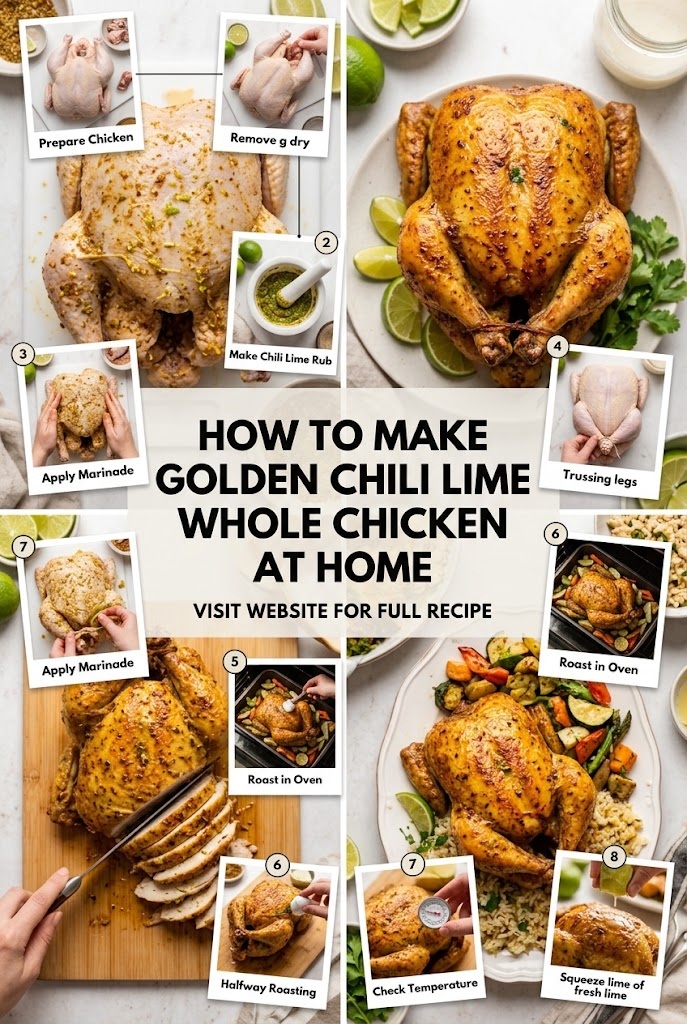
The aroma of a roasting chicken is perhaps one of the most comforting scents in the culinary world. But when you elevate that classic roast with the vibrant, zesty tang of fresh lime and the smoldering heat of premium chili, you transform a standard Sunday dinner into a gourmet masterpiece. This Golden Chili Lime Whole Chicken isn’t just a meal; it’s a sensory experience that combines the science of the Maillard reaction with the art of balanced seasoning.
In this comprehensive guide, we will explore every facet of creating the perfect chili lime chicken. From selecting the bird to the physics of crispy skin and the ultimate side dish pairings, you are about to become a master of the roast.
Why This Recipe is a Game-Changer
What sets the Golden Chili Lime Whole Chicken apart from a standard rotisserie bird? It is the equilibrium between acidity, heat, and sweetness. The lime juice acts as a natural tenderizer, breaking down tough connective tissues. The chili provides a complex warmth that lingers without overpowering the palate. Finally, the “golden” element—usually achieved through a touch of honey or maple syrup combined with high-quality fats—ensures a lacquered, mahogany skin that is as visually stunning as it is delicious.
Selecting the Perfect Bird
The foundation of a great dish is the quality of the primary ingredient. When shopping for your chicken, consider the following:
- Size Matters: For the best flavor and texture, aim for a bird between 3.5 to 4.5 pounds. Larger chickens often have a higher water content and can become “woody” or tough.
- Air-Chilled vs. Water-Chilled: If possible, opt for air-chilled chicken. Water-chilled birds absorb excess moisture during processing, which can lead to soggy skin and diluted flavor. Air-chilled chicken yields a crispier exterior and a more concentrated chicken taste.
- Organic and Pasture-Raised: While more expensive, pasture-raised chickens have a richer fat profile and more robust flavor due to their varied diet.
The Science of the Golden Marinade
The “Golden” in Golden Chili Lime Whole Chicken comes from the interaction of sugars and proteins under heat. To achieve this, your marinade must contain specific components:
- The Acid (Lime): You need both the juice and the zest. The zest contains essential oils that provide a floral, citrusy punch, while the juice provides the acidity necessary for tenderization.
- The Heat (Chili): Use a blend of chili powders. Ancho chili powder offers a mild, smoky sweetness, while Cayenne adds a sharp kick. Smoked Paprika is the secret ingredient for that deep, reddish-golden hue.
- The Fat (Butter or Avocado Oil): Fat is the vehicle for flavor. Butter provides a rich, nutty taste (Beurre Noisette) as it browns, while avocado oil has a high smoke point, ensuring your chicken doesn’t burn before it’s cooked through.
- The Sweetener (Honey): A small amount of honey facilitates the caramelization process, resulting in that coveted “golden” glow.
- The Aromatics: Garlic and onion powder are essential, but fresh smashed garlic cloves inside the cavity provide an olfactory depth that powders cannot replicate.
Ingredients List
To create this masterpiece, gather the following:
- 1 Whole Chicken (approx. 4 lbs)
- For the Rub:
- 3 tablespoons Unsalted Butter (softened) or Avocado Oil
- 2 tablespoons Fresh Lime Juice
- 1 tablespoon Lime Zest
- 2 teaspoons Smoked Paprika
- 1 teaspoon Ancho Chili Powder
- 1/2 teaspoon Cayenne Pepper (adjust to heat preference)
- 1 tablespoon Kosher Salt
- 1 teaspoon Freshly Ground Black Pepper
- 1 tablespoon Honey
- 1 teaspoon Onion Powder
- 1 teaspoon Garlic Powder
- For the Cavity:
- 1 Lime, halved
- 4 cloves Garlic, smashed
- 1 small Yellow Onion, quartered
- A few sprigs of Fresh Cilantro or Thyme
Preparation: The Key to Success
Step 1: The Dry Brine (Optional but Recommended)
For the juiciest meat and crispest skin, salt your chicken 12–24 hours in advance. Pat the chicken completely dry with paper towels and rub a generous amount of salt over the skin. Leave it uncovered in the refrigerator. This allows the salt to penetrate deep into the muscle fibers while the cold air dries out the skin.
Step 2: Tempering the Meat
Never put a cold chicken straight into a hot oven. Remove the chicken from the refrigerator at least 45 minutes before cooking. This ensures even cooking from the surface to the bone.
Step 3: Preparing the Marinade
In a small bowl, whisk together the softened butter (or oil), lime juice, zest, honey, and all the spices. It should form a thick, fragrant paste.
Step 4: Applying the Flavor
Pat the chicken dry once more. Use your fingers to gently loosen the skin over the breast meat, being careful not to tear it. Stuff a generous portion of the chili-lime paste under the skin. This protects the lean breast meat from drying out and flavors it directly. Rub the remaining paste over the entire exterior of the bird.
Step 5: Stuffing the Cavity
Place the lime halves, smashed garlic, onion, and herbs inside the cavity. As the chicken roasts, these aromatics will steam from the inside out, infusing the meat with moisture and scent.
The Cooking Process
The Spatchcock Option
If you want your chicken to cook in nearly half the time with maximum skin crispiness, consider “spatchcocking” (butterflying) the bird. Use kitchen shears to remove the backbone, then press down on the breastbone until it cracks and the chicken lies flat. This exposes more surface area to the heat.
Traditional Roasting
If keeping the bird whole, use a roasting pan with a rack. This allows hot air to circulate under the bird, preventing a “soggy bottom.”
- Preheat: Set your oven to 425°F (218°C). A high initial temperature is crucial for rendering the fat and starting the golden crust.
- Initial Sear: Roast the chicken at 425°F for 15–20 minutes.
- The Lower Roasting: Reduce the heat to 375°F (190°C). This allows the interior to reach the safe temperature of 165°F without burning the honey-infused skin.
- Basting: Every 20 minutes, use a spoon or brush to coat the bird in the drippings that have collected in the pan. This reinforces the “golden” color.
How to Know When It’s Done
Relying on a timer is risky because oven temperatures and chicken sizes vary. Instead, use an instant-read meat thermometer.
- Target Temperature: Insert the probe into the thickest part of the thigh, making sure not to hit the bone. The chicken is safe to pull at 160°F (71°C) because “carry-over cooking” will bring it up to the final 165°F as it rests.
- Visual Cues: The juices should run clear, not pink, when the thigh is pierced.
The Importance of Resting
This is the most skipped, yet most vital step. Once you remove the chicken from the oven, transfer it to a cutting board and let it rest for at least 15 to 20 minutes.
During roasting, the muscle fibers tighten and push juices toward the center. If you cut it immediately, those juices will spill out onto the board, leaving you with dry meat. Resting allows the fibers to relax and reabsorb the juices, ensuring every bite is succulent.
Troubleshooting Common Issues
- Skin is Burning but Meat is Raw: This usually happens because of the honey in the marinade. If the skin is getting too dark too quickly, tent the bird loosely with aluminum foil.
- Soggy Skin: This is caused by excess moisture. Ensure the bird is bone-dry before applying the fat, and avoid “crowding” the roasting pan with too many vegetables, which can create steam.
- Rubbery Skin: This happens if the oven temperature is too low. The fat doesn’t have a chance to render out. Start high (425°F) to “fry” the skin from the outside.
Elevating the Dish: Side Dish Pairings
To complement the bold flavors of chili and lime, you need sides that offer contrast—either through creaminess, freshness, or starchiness.
1. Cilantro Lime Rice
A classic pairing. Use long-grain basmati rice cooked in chicken stock, then fold in fresh chopped cilantro and a squeeze of lime juice just before serving.
2. Charred Corn Salad (Esquites Style)
Sauté corn kernels with garlic, jalapeños, and a touch of mayo or Mexican crema. Top with crumbled cotija cheese and a dusting of chili powder. The sweetness of the corn balances the acidity of the chicken.
3. Roasted Sweet Potatoes
The natural sugars in sweet potatoes caramelize beautifully and stand up well to the heat of the chili rub. Toss them in the same spices used for the chicken for a cohesive meal.
4. Avocado and Cucumber Salad
For a refreshing contrast, a simple salad of sliced avocado, crisp cucumber, and red onion with a light vinaigrette provides a cooling effect that cleanses the palate between bites of spicy chicken.
Leftover Transformations
If you have leftovers, you are in luck. The Golden Chili Lime Whole Chicken is incredibly versatile for meal prepping.
- Chili Lime Chicken Tacos: Shred the remaining meat and warm it in a pan. Serve in corn tortillas with pickled red onions and salsa verde.
- Gourmet Chicken Salad: Mix the shredded chicken with Greek yogurt (instead of mayo), diced celery, and extra lime zest for a healthy, high-protein lunch.
- The Best Chicken Broth: Don’t throw away the carcass! The bones are covered in chili and lime seasoning. Boil the carcass with carrots, celery, and onions to create a “Zesty Chicken Bone Broth” that is perfect for spicy soups or sipping.
The Secret Technique: Infusing the Fat
For those who want to go the extra mile, try making a “Chili-Lime Compound Butter.” Mix your spices into the butter a day in advance. This allows the fat-soluble compounds in the chili powder to fully dissolve into the butter, creating a more uniform and intense flavor profile. When you rub this matured butter onto the chicken, the flavor depth is significantly more noticeable than if you mixed it right before roasting.
Health Benefits
Beyond its incredible taste, this recipe is packed with nutritional benefits:
- High Protein: Essential for muscle repair and satiety.
- Vitamin C: Provided by the lime juice and zest, which supports immune function.
- Capsaicin: Found in the chili peppers, known to boost metabolism and reduce inflammation.
- Low Carb: Since we use honey sparingly for caramelization, this dish remains very low in carbohydrates, making it ideal for keto or paleo lifestyles (simply swap honey for a monk fruit sweetener if needed).
Conclusion: A Masterpiece on a Platter
Mastering the Golden Chili Lime Whole Chicken is a rite of passage for any home cook. It requires attention to detail—the drying of the skin, the balance of the marinade, and the patience of the rest period—but the results are undeniably worth it.
When you bring that glistening, golden bird to the table, and the steam rises to reveal the scent of charred chili and bright citrus, you’re not just serving food. You’re providing an experience that celebrates the complexity of simple ingredients. Whether it’s a festive gathering or a quiet Tuesday night, this chicken is guaranteed to be the star of the show.
Frequently Asked Questions
Can I use a slow cooker for this recipe? While you can cook a whole chicken in a slow cooker, you will lose the “golden” crispy skin. If you choose this method, you may want to place the chicken under the broiler for 5 minutes after it finishes in the slow cooker to crisp up the exterior.
How do I prevent the garlic inside the cavity from burning? By placing aromatics inside the cavity, they are protected by the meat and the moisture of the bird. They won’t burn; instead, they will gently steam, which is exactly what you want for flavor infusion.
Is it okay to use bottled lime juice? In a pinch, yes, but you will lose the essential oils from the lime zest. Fresh lime is highly recommended for the most authentic and vibrant flavor.
What if I don’t have a roasting rack? You can create a “natural” rack by slicing thick rounds of onion, carrot, and celery and placing the chicken on top of them. This keeps the bird elevated and infuses the drippings with even more vegetable flavor.
Can I use this marinade on chicken pieces instead of a whole bird? Absolutely. If using breasts, thighs, or drumsticks, reduce the cooking time significantly. Thighs are particularly good with this marinade as they remain juicy even at high temperatures.