
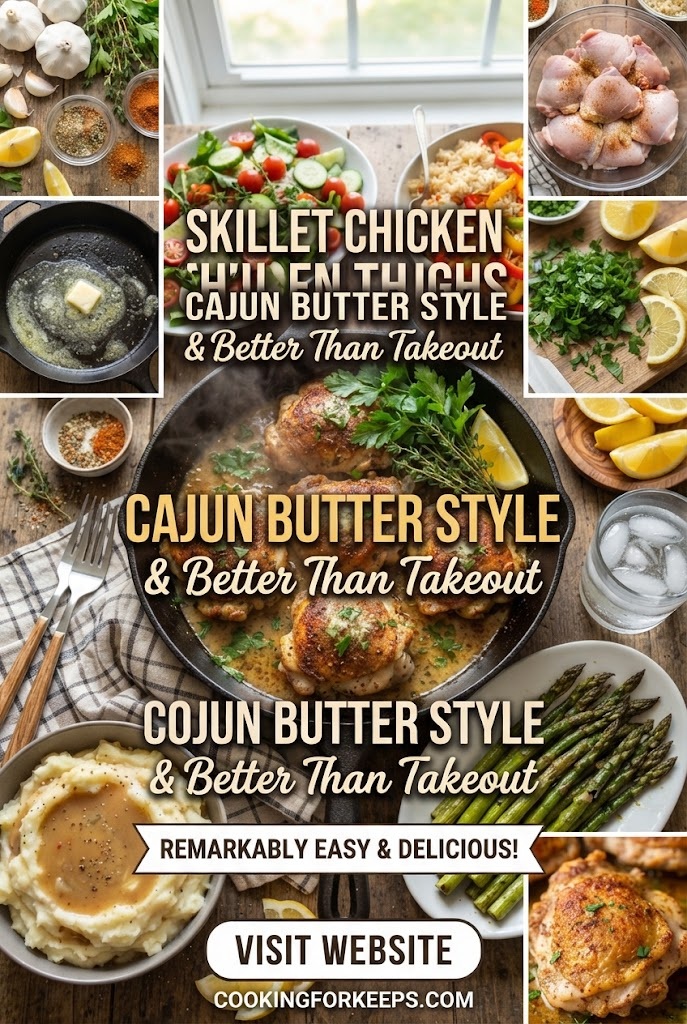
In the world of home cooking, few things are as satisfying as a meal that tastes like it came from a high-end bistro but costs a fraction of the price and requires minimal cleanup. Enter the Skillet Chicken Thighs Cajun Butter Style. This isn’t just another chicken recipe; it is a masterclass in flavor, texture, and the transformative power of a well-seasoned cast iron pan.
When we talk about “Better Than Takeout,” we are referring to that elusive combination of a shatteringly crispy skin, succulent and juicy meat, and a sauce so rich and vibrant that you’ll want to drizzle it over everything on your plate. By the time you finish this guide, you will understand the science behind the perfect sear, the history of the Cajun spice profile, and the secrets to making a butter sauce that rivals the best soul food kitchens in New Orleans.
Why Chicken Thighs are the Unsung Heroes of the Kitchen
While chicken breasts often get the spotlight for being “lean,” the chicken thigh is the true MVP of the culinary world, especially when cooking in a skillet.
The Flavor Factor
Chicken thighs are dark meat, which means they contain more myoglobin and a higher fat content than breasts. This fat is essential for two reasons: it keeps the meat moist during high-heat cooking and it carries the flavors of the Cajun spices deep into the muscle fibers. When you cook a breast at high heat, you have a narrow window before it becomes dry and stringy. With thighs, the connective tissue breaks down into gelatin, creating a mouthfeel that is incomparably silky.
The Texture of the Skin
If you are using bone-in, skin-on thighs, you have the opportunity to create a “crust” that is the hallmark of professional cooking. The skin acts as a natural insulator, protecting the meat while rendering its own fat to fry itself into a golden, crackling shell.
Economic Value
In an era where grocery prices are fluctuating, chicken thighs remain one of the most budget-friendly protein options available. Buying them in bulk and mastering this Cajun butter technique allows you to serve a five-star meal for the price of a fast-food combo.
The Anatomy of the Perfect Cajun Spice Rub
To achieve that authentic Louisiana kick, you cannot rely on a dusty, store-bought “blackening” seasoning that has been sitting on a shelf for six months. A truly “Better Than Takeout” dish requires a custom blend.
The Essential Components
- Smoked Paprika: This provides the deep red color and a subtle wood-fired aroma.
- Cayenne Pepper: The source of the heat. Adjust this based on your tolerance, but a true Cajun dish should have a slow, lingering warmth.
- Garlic and Onion Powder: These provide the savory “umami” base that rounds out the spices.
- Dried Thyme and Oregano: These earthy herbs represent the French and Spanish influences on Cajun cuisine.
- Black and White Pepper: Using both adds different dimensions of heat—black pepper hits the back of the throat, while white pepper provides a sharp, floral bite.
- Kosher Salt: Essential for drawing out moisture from the skin to ensure maximum crispiness.
The Ratio Secret
The secret to a great rub is balance. You want enough salt to season the meat deeply, but enough paprika and herbs to create a “bark” on the exterior of the chicken. When the spices hit the hot butter and chicken fat, they “bloom,” releasing essential oils that intensify the flavor.
Choosing Your Equipment: The Power of Cast Iron
While you can make this in a stainless steel or non-stick pan, a cast iron skillet is the gold standard for Cajun Butter Chicken.
- Heat Retention: Cast iron holds heat better than any other material. When you drop cold chicken into the pan, the temperature doesn’t plummet. This is crucial for achieving an immediate sear.
- Even Cooking: Once heated, cast iron provides a steady, even heat source, preventing “hot spots” that might burn your spices before the meat is cooked through.
- The “Fond”: As the chicken cooks, little browned bits (called fond) will stick to the bottom of the pan. This is concentrated flavor. In a cast iron skillet, this fond deglazes beautifully into the butter sauce, creating a complex gravy that you simply can’t get in a non-stick pan.
The Step-by-Step Guide to Skillet Chicken Thighs Cajun Butter Style
1. Preparation: The Key to Success
Take your chicken thighs out of the refrigerator at least 20 minutes before cooking. Cold meat hitting a hot pan causes the muscle fibers to tense up, resulting in a tougher texture.
Pro Tip: Use paper towels to pat the chicken skin bone-dry. Any moisture on the surface will create steam, and steam is the enemy of crispiness.
2. The Seasoning Process
Generously coat every inch of the thighs with your Cajun rub. Don’t just sprinkle it; press it into the skin and the underside of the meat. This ensures the spices adhere during the searing process.
3. The Sear (The Most Important Step)
Start with a cold-to-medium-hot pan with a small amount of high-smoke-point oil (like avocado or grapeseed oil). Place the chicken skin-side down.
Listen for the sizzle. You want to hear a steady “hiss.” Let the chicken sit undisturbed for 6–8 minutes. Resisting the urge to flip the meat is the hardest part of the process, but it is necessary for the skin to release naturally from the pan once it’s crispy.
4. The Butter Infusion
Once the skin is golden and crispy, flip the thighs. Now, add the “Cajun Butter” elements:
- Unsalted butter (at least 4 tablespoons).
- Smashed garlic cloves.
- Fresh rosemary or thyme sprigs.
- A splash of lemon juice (the acidity cuts through the richness).
As the butter melts and foams, use a large spoon to continuously pour the hot, flavored butter over the crispy skin. This technique, known as arroser in French cooking, ensures the meat stays basting in flavor while the skin remains crunchy.
5. Finishing to Perfection
Depending on the thickness of the thighs, you can finish them on the stovetop by lowering the heat and covering the pan for a few minutes, or you can slide the entire skillet into a 400°F oven for about 10 minutes. The internal temperature should reach 175°F for thighs. Unlike breasts, which are done at 165°F, thighs benefit from the higher temperature as it further breaks down the collagen.
The Science of the “Cajun Butter” Sauce
What makes this “Better Than Takeout” is the pan sauce created at the end. After removing the chicken to rest, you are left with a pan full of rendered chicken fat, browned butter, and toasted spices.
By adding a splash of chicken stock or heavy cream to the hot skillet and whisking vigorously, you emulsify these fats into a luxurious, velvety sauce. This sauce captures the “Maillard reaction” products—the chemical reaction between amino acids and reducing sugars that gives browned food its distinctive flavor.
Perfect Pairings: What to Serve with Cajun Chicken
To make this a complete meal that outperforms your local restaurant, you need the right side dishes.
The Classic: Dirty Rice or Garlic Herb Rice
The bold flavors of the Cajun butter demand a neutral but flavorful starch. A long-grain white rice cooked with chicken stock, sautéed onions, and bell peppers (the “Holy Trinity” of Cajun cooking) is the traditional choice.
The Low-Carb Option: Roasted Cauliflower or Zucchini
If you are following a Keto or low-carb lifestyle, this recipe is naturally your best friend. Serve the chicken over mashed cauliflower or sautéed zucchini noodles. The Cajun butter sauce acts as the perfect dressing for the vegetables.
The Comfort Choice: Smoked Gouda Mac and Cheese
For a truly indulgent experience, the creaminess of a high-quality mac and cheese provides a beautiful contrast to the spicy, zesty chicken.
Common Mistakes to Avoid
- Crowding the Pan: If you put too many thighs in one skillet, the temperature will drop, and the chicken will boil in its own juices rather than searing. Cook in batches if necessary.
- Using High Heat Only: Starting with high heat is good for the sear, but you must lower it or move the pan to the oven to cook the meat through. Burnt spices taste bitter, not “blackened.”
- Forgetting to Rest the Meat: Always let your chicken rest for at least 5 minutes before cutting into it. This allows the juices to redistribute. If you cut it immediately, the moisture will run out onto the plate, leaving you with dry meat.
Variations of the Recipe
While the classic Cajun Butter is hard to beat, you can adapt this technique to suit different palates:
- Creamy Cajun Chicken: Add 1/2 cup of heavy cream and a handful of parmesan cheese to the pan after the chicken is cooked. This creates a “Cajun Alfredo” style sauce that is incredible over pasta.
- Honey Cajun Style: Add a tablespoon of honey to the butter at the very end. The sweetness balances the cayenne heat perfectly, creating a “hot honey” effect.
- The “Holy Trinity” Addition: Sauté finely diced celery, bell peppers, and onions in the chicken fat before adding the butter to create a more vegetable-forward, traditional Louisiana base.
Nutritional Benefits: Is Cajun Butter Chicken Healthy?
When prepared at home, this dish is significantly healthier than takeout versions.
- Control over Sodium: Commercial Cajun seasonings and restaurant dishes are often loaded with salt. By making your own rub, you control the sodium levels.
- Healthy Fats: While butter is used, it is the primary source of flavor, meaning you don’t need sugary glazes or processed seed oils found in many takeout options.
- High Protein: Chicken thighs provide essential amino acids, iron, and zinc.
Storing and Reheating for Meal Prep
One of the reasons this recipe is a favorite for busy families is how well it holds up.
- Refrigeration: Store in an airtight container for up to 4 days.
- Reheating: To maintain the crispy skin, avoid the microwave. Instead, place the chicken in a toaster oven or a skillet over medium heat until warmed through.
- Freezing: You can freeze the cooked thighs in the sauce for up to 3 months. Thaw overnight in the fridge before reheating.
The Cultural Significance of Cajun Cooking
To truly appreciate this dish, one must understand its roots. Cajun cuisine originated from the Acadian people—French colonists who were exiled from Canada and settled in the swampy bayous of Louisiana.
They had to adapt their French cooking techniques to the local ingredients available to them: wild game, shellfish, and a variety of peppers. Cajun cooking is “rustic” cooking—it’s about making the most of what you have, using one pot (or skillet), and layering flavors through long, slow cooking or intense searing. By making this Skillet Chicken, you are participating in a long-standing tradition of soulful, resourceful, and incredibly flavorful American regional cooking.
Mastering the “Blackened” Look Without the Smoke
Many people avoid Cajun cooking at home because they fear setting off the smoke alarm. “Blackening” technically involves dipping meat in butter and spices and throwing it into a white-hot cast iron skillet.
However, the Cajun Butter Style is a more refined version. By using a medium-high heat and a combination of oil (for the sear) and butter (for the finish), you get that dark, mahogany color and intense flavor without the kitchen being filled with smoke. The “black” color in modern Cajun cooking usually comes from the charred spices and the dark pigments in smoked paprika, rather than actual burnt carbon.
Conclusion: Elevate Your Dinner Game
Making Skillet Chicken Thighs Cajun Butter Style is more than just making dinner; it’s about mastering a set of skills that will serve you in every other aspect of cooking. You are learning heat management, seasoning balance, and the importance of quality ingredients.
Next time you are tempted to pull up a delivery app and order a mediocre, lukewarm chicken dinner, remember that in 30 minutes, you could be sitting down to a plate of crispy, spicy, buttery perfection. This dish is bold, it’s comforting, and it is undeniably better than takeout.
Grab your cast iron skillet, mix your spices, and get ready for a meal that will become a weekly staple in your household. The aroma alone will convince you that you’ve made the right choice, but the first bite of that crispy Cajun skin will seal the deal.
Frequently Asked Questions (FAQs)
Can I use boneless chicken thighs? Yes, boneless thighs work perfectly and cook faster. However, you will miss out on some of the flavor that the bone provides, and it can be slightly harder to get the skin as crispy without the bone holding the shape. Reduce cooking time by about 3–5 minutes.
What if I don’t have a cast iron skillet? A heavy-bottomed stainless steel pan (like an All-Clad) is the next best thing. Avoid thin aluminum pans, as they won’t hold the heat necessary for a good sear.
How spicy is this recipe? The beauty of the homemade rub is that you control the heat. For a mild version, use more smoked paprika and only a pinch of cayenne. For a true Louisiana heat, increase the cayenne and add a dash of red pepper flakes.
Can I use this seasoning on other proteins? Absolutely. This Cajun butter technique works wonders on shrimp, salmon, or even pork chops. The cooking times will vary, but the flavor profile is universal.
Is this recipe Keto-friendly? Yes! This recipe is naturally very low in carbohydrates and high in healthy fats and protein, making it an ideal choice for those on a ketogenic or Paleo diet. Just ensure your spices don’t have added sugar (some store-bought mixes do).