
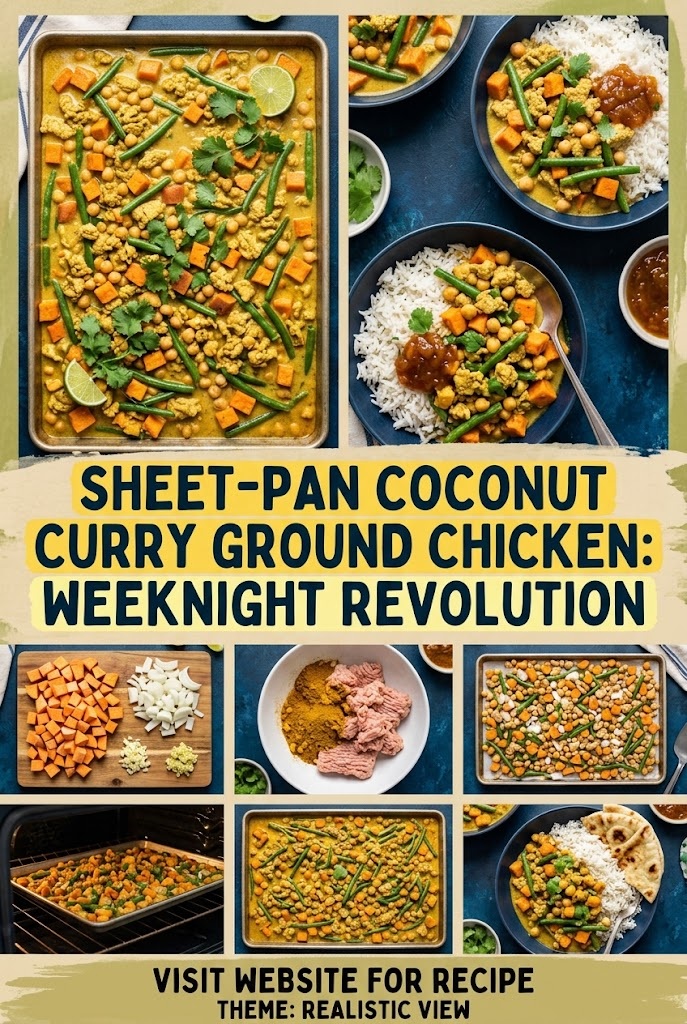
In the modern, fast-paced world, the quest for the perfect weeknight dinner often feels like a balancing act between health, flavor, and time. We want something that tastes like it spent hours simmering on a stovetop but requires minimal cleanup and effort. Enter the Sheet-Pan Coconut Curry Ground Chicken. This dish is not just a recipe; it is a strategic solution to the “what’s for dinner?” dilemma. By combining the rich, aromatic profiles of Southeast Asian cuisine with the practical efficiency of American sheet-pan cooking, this meal has quickly become a gold standard for home cooks across the country.
Why the Sheet-Pan Method is a Culinary Game-Changer
Before diving into the specifics of coconut curry, it is essential to understand why the sheet pan has reclaimed its throne in the kitchen. For years, ground chicken was relegated to burgers or pasta sauces. By moving it to a baking sheet, we unlock a completely different texture and flavor profile.
The Beauty of One-Pan Cleanliness
The primary appeal is, of course, the cleanup. When you cook everything—the protein, the aromatics, and the vegetables—on a single rimmed baking sheet, you eliminate the mountain of pots and pans that usually follows a curry night. There is no heavy Dutch oven to scrub or rice cooker lid to disassemble. One pan, one piece of parchment paper, and you are done.
Even Caramelization and Flavor Distribution
Unlike a stir-fry, where ingredients can sometimes become soggy if the pan is overcrowded, a large sheet pan allows for better airflow. As the ground chicken roasts, its natural fats render out and mingle with the coconut milk and curry paste, creating a concentrated sauce that coats every floret of broccoli and slice of bell pepper. This results in “fond”—those little browned bits—that pack a massive punch of umami.
Decoding the Flavor Profile: Coconut Meets Curry
The heart of this dish lies in the balance of five key elements: creaminess, spice, acidity, salt, and sweetness.
The Role of Coconut Milk
For this recipe, full-fat canned coconut milk is non-negotiable. While “lite” versions exist, they lack the viscosity needed to create a luxurious glaze in the dry heat of an oven. The coconut milk acts as the fat source, keeping the lean ground chicken moist while providing a velvety mouthfeel that offsets the heat of the curry.
Choosing Your Curry Paste
The beauty of this sheet-pan meal is its versatility. Depending on your mood, you can swap the type of curry paste used:
- Thai Red Curry Paste: Bold, spicy, and heavy on the dried red chilies. This is for those who want a classic, vibrant kick.
- Thai Green Curry Paste: Brighter and more herbal, featuring fresh green chilies, cilantro roots, and kaffir lime peel.
- Yellow Curry Paste: Milder and more turmeric-forward, perfect for families with children or those sensitive to heat.
The Anatomy of Ingredients
To reach culinary excellence, one must understand the components. Here is a deep dive into what makes this sheet-pan chicken extraordinary.
1. Ground Chicken: The Lean Canvas
Ground chicken is often leaner than ground beef or pork. While this makes it a healthier option, it also means it can dry out if not handled correctly. By mixing the chicken with coconut milk and aromatics before roasting, we insulate the protein, ensuring it stays juicy and tender.
2. The Aromatics: Ginger, Garlic, and Shallots
Never underestimate the power of fresh aromatics. While powdered versions are convenient, fresh grated ginger and minced garlic provide a pungent, spicy base that defines the dish. Shallots, being sweeter and more delicate than standard onions, caramelize beautifully in the oven without overpowering the other flavors.
3. The Vegetable Medley
A great sheet-pan meal provides a variety of textures. For this coconut curry version, consider:
- Red Bell Peppers: For sweetness and a pop of color.
- Broccoli or Broccolini: The florets act like sponges, soaking up the curry sauce.
- Snap Peas: Added in the last five minutes for a crunch.
- Sweet Potatoes: Cubed small, they add a hearty, earthy sweetness that pairs perfectly with coconut.
4. The Finishing Touches
A dish is only as good as its garnish. Fresh lime juice is mandatory to cut through the richness of the coconut. Fresh cilantro, mint, and toasted cashews add layers of freshness and crunch that elevate the meal from “basic” to “gourmet.”
Step-by-Step Guide to the Perfect Roast
Achieving the perfect texture on a sheet pan requires a bit of technique. Follow these steps for guaranteed success.
Step 1: Prep the Oven and Pan
Preheat your oven to 400°F (200°C). High heat is necessary to roast the vegetables and brown the chicken quickly. Line a large, rimmed heavy-duty baking sheet with parchment paper or a silicone mat. This prevents sticking and makes cleanup a breeze.
Step 2: The “Sauce-Meat” Mixture
In a medium bowl, combine the ground chicken with half of your coconut milk, the curry paste, minced garlic, grated ginger, and a splash of fish sauce (or soy sauce). Use a fork to mix it gently—overworking the meat can make it tough.
Step 3: Vegetable Preparation
Toss your chopped vegetables in a light coating of oil (coconut or avocado oil works best) and a pinch of salt. Remember, the curry sauce will eventually coat them, but they need their own seasoning base first.
Step 4: The Arrangement
Spread the vegetables out on the sheet pan, leaving several “nests” or spaces for the chicken. Drop the ground chicken mixture into these spaces in small, bite-sized chunks (think rustic meatballs). This allows the chicken to develop crispy edges while the interior stays moist.
Step 5: The First Roast
Slide the pan into the oven for 15-18 minutes. Halfway through, give the vegetables a toss, but leave the chicken chunks relatively undisturbed to ensure browning.
Step 6: The Final Glaze
Remove the pan and drizzle the remaining coconut milk over the top. Return to the oven for another 5-7 minutes. This creates a “pan sauce” effect right on the sheet.
The Science of Sourcing: Quality Matters
Because this recipe has relatively few ingredients, the quality of each one matters immensely.
Finding the Right Ground Chicken
Look for “ground chicken thighs” if possible. Most grocery store ground chicken is a blend of breast and thigh, but a higher thigh content provides more flavor and a better fat ratio for roasting. If you can only find ground breast, add an extra tablespoon of coconut oil to the mix.
Understanding Coconut Milk Brands
Not all canned coconut milk is created equal. Look for brands that have a high percentage of coconut extract and minimal stabilizers like guar gum. The cream should be thick and separate from the water at the bottom of the can—this is a sign of a high-quality, high-fat product.
Nutritional Benefits: A Health Powerhouse
This Sheet-Pan Coconut Curry Ground Chicken isn’t just delicious; it’s a nutritional powerhouse designed to fuel your body.
- High Protein, Low Carb: This meal is naturally high in lean protein, making it ideal for muscle recovery. If served with cauliflower rice, it becomes an excellent Keto-friendly or Paleo option.
- Anti-Inflammatory Properties: Turmeric (found in curry paste) and ginger are well-known for their anti-inflammatory benefits.
- Healthy Fats: Medium-chain triglycerides (MCTs) found in coconut milk are a quick source of energy for the brain and body.
- Micronutrient Rich: Between the bell peppers (Vitamin C), broccoli (Vitamin K and Fiber), and chicken (B vitamins), you are hitting a wide spectrum of your daily requirements in one sitting.
Expert Tips for Maximum Flavor
To take this dish to the next level, consider these “pro-tips” used by professional chefs:
- The Fish Sauce Secret: Don’t be afraid of fish sauce. It smells strong, but it provides a deep, salty funk that salt alone cannot replicate. It is the “secret ingredient” in all great Southeast Asian cooking.
- Don’t Crowd the Pan: If you are cooking for a large family, use two sheet pans. If the ingredients are piled on top of each other, they will steam instead of roast, and you’ll lose those crispy, caramelized edges.
- The Broiler Finish: If your chicken looks cooked but lacks color, turn on the broiler for the last 2 minutes. Watch it closely! This will char the edges of the peppers and give the chicken a beautiful golden hue.
- Zest Before You Juice: Before you cut your lime to squeeze over the finished dish, zest it. Adding the lime zest to the chicken mixture before roasting infuses the meat with a bright, citrusy aroma that survives the heat of the oven.
Meal Prepping and Storage
One of the reasons this recipe has become a weeknight favorite is its durability. It is one of the rare meals that actually tastes better the next day.
How to Store
Store leftovers in an airtight container in the refrigerator for up to 4 days. The coconut curry sauce will thicken when cold, almost turning into a savory jelly.
Reheating Instructions
- Microwave: Cover with a damp paper towel to maintain moisture and heat for 1.5 – 2 minutes.
- Stovetop: Toss the leftovers in a skillet with a splash of water or extra coconut milk over medium heat until warmed through. This helps revive the sauce’s creamy texture.
Freezing
While you can freeze this dish, the texture of the vegetables (especially peppers and broccoli) may become somewhat soft upon thawing. If you plan to freeze it, consider undercooking the vegetables slightly.
What to Serve with Coconut Curry Chicken
While this is a complete meal on its own, adding a base can help stretch the portions and soak up every drop of that liquid gold sauce.
Traditional Grains
- Jasmine Rice: The floral aroma of Jasmine rice is the classic partner for curry.
- Basmati Rice: If you prefer a nuttier flavor and a grain that stays separate.
- Brown Rice: For an extra boost of fiber.
Low-Carb Alternatives
- Cauliflower Rice: Sauté it quickly with a bit of lime and cilantro.
- Zucchini Noodles: The heat from the chicken will soften the “zoodles” perfectly without needing extra cooking.
- Quinoa: A protein-packed alternative that absorbs the coconut milk beautifully.
Customizing for Dietary Needs
This recipe is incredibly adaptable, making it a “unicorn” for households with multiple dietary restrictions.
- For the Vegan/Vegetarian: Swap the ground chicken for crumbled extra-firm tofu or a tin of chickpeas. Use soy sauce or tamari instead of fish sauce.
- For the Gluten-Free: Most curry pastes are naturally gluten-free, but always check the label for hidden wheat thickeners. Ensure your soy sauce is substituted with Tamari or Coconut Aminos.
- For the Spice-Averse: Use a mild Yellow Curry powder instead of paste, and increase the amount of coconut milk to dilute the intensity.
The Cultural Fusion of the Sheet-Pan Curry
It is worth noting the interesting cultural intersection this dish represents. Traditional Thai and Indian curries are almost always liquid-based, cooked in a wok or a pot. The “dry curry” or “roasted curry” is a more modern adaptation that fits the Western lifestyle. By taking the flavor profile of the East and applying the roasting techniques of the West, we create a hybrid dish that respects the ingredients while innovating on the method.
In the United States, the “Sheet-Pan Dinner” movement gained traction in the mid-2010s as home cooks sought efficiency without sacrificing the “foodie” culture of bold, international flavors. This Coconut Curry Ground Chicken is the pinnacle of that movement.
Common Mistakes to Avoid
Even with a recipe this simple, a few pitfalls can occur.
Using Cold Coconut Milk
If your coconut milk has been in a cold pantry or fridge, the fat will be a solid block. Ensure you whisk it or warm it slightly so it’s a smooth liquid before mixing it with the chicken. This ensures even distribution.
Cutting Vegetables Too Large
Since ground chicken cooks relatively quickly (about 20 minutes), your vegetables need to be cut to a size that will soften in the same timeframe. Broccoli should be in small florets, and sweet potatoes should be in 1/2 inch cubes.
Skipping the Acid
Without the lime juice at the end, the dish can feel “heavy” due to the coconut fat and the salt. The acid of the lime acts as a highlighter, making the other flavors pop.
Troubleshooting Your Curry
“My chicken is too dry.” Next time, use more coconut milk in the initial mix, or check your oven temperature. A meat thermometer should read 165°F (74°C) for the chicken.
“The sauce is too runny.” This can happen if the vegetables release too much water (common with frozen veggies). If this happens, remove the chicken and veggies and pop the pan back in under the broiler for 3 minutes to reduce the liquid.
“It’s too spicy!” Don’t panic. Serve it with a dollop of Greek yogurt or extra coconut cream on top. The fat and dairy (or dairy-free fat) help neutralize the capsaicin on your tongue.
Seasonal Variations
While the base recipe is perfect year-round, you can rotate the produce to match the seasons:
- Spring: Use asparagus spears, peas, and green onions.
- Summer: Incorporate zucchini, summer squash, and fresh cherry tomatoes that burst in the oven.
- Fall/Winter: Use butternut squash, kale, and parsnips for a heartier, warming version.
The Verdict: Why This Will Be Your New Favorite
The Sheet-Pan Coconut Curry Ground Chicken solves the most significant hurdle of home cooking: the effort-to-reward ratio. Within 30 minutes, you have a meal that is vibrant, complex, and deeply satisfying. It looks beautiful on the plate with its array of colors, and it smells like a five-star restaurant.
Whether you are a busy parent trying to get a healthy meal on the table between soccer practices, or a professional looking for a high-protein meal prep option that doesn’t taste like cardboard, this dish delivers. It challenges the notion that ground chicken is boring and proves that with a few pantry staples—curry paste and coconut milk—you can transform humble ingredients into a culinary masterpiece.
Final Thoughts on Technique
Cooking is an art, but recipes are the map. Once you master the basic ratio of this sheet-pan curry (1 lb meat, 1/2 can coconut milk, 2-3 tbsp curry paste), the world is your oyster. You can experiment with ground turkey, sliced pork, or even shrimp. The sheet pan is your canvas, and the coconut curry is your palette.
Embrace the sizzle of the oven, the aroma of roasting ginger, and the joy of a kitchen that isn’t cluttered with dishes. This is modern cooking at its finest—uncomplicated, undeniably delicious, and perfectly suited for the American kitchen.
Summary of Key Steps for Success:
- High Heat: 400°F is the sweet spot.
- Quality Fat: Full-fat coconut milk only.
- Texture: Don’t over-mix the chicken.
- Brightness: Never skip the fresh lime and herbs at the end.
This Sheet-Pan Coconut Curry Ground Chicken is more than a trend; it’s a staple. Add it to your rotation this week and experience the transformation of your weeknight dining.