
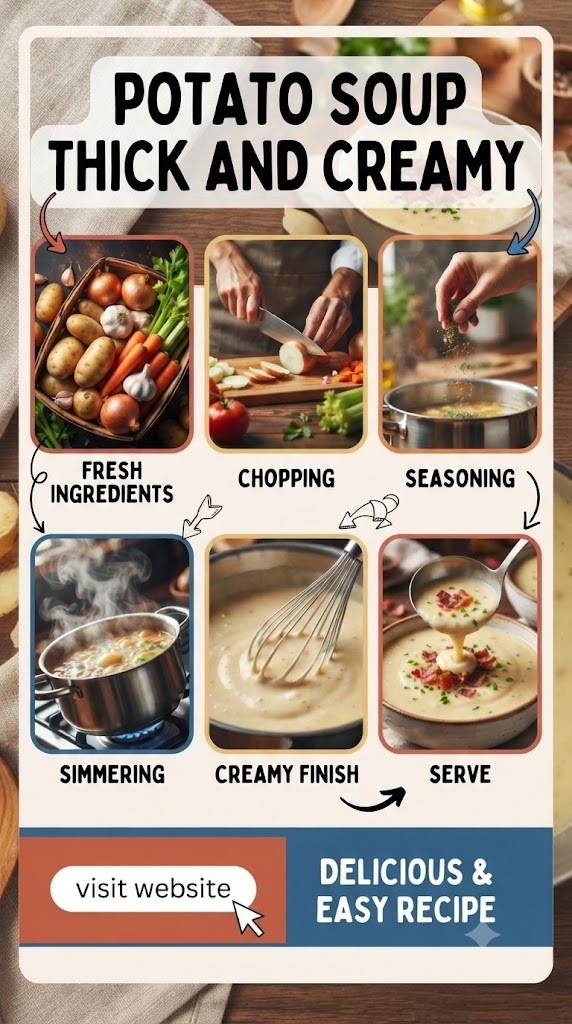
There is a specific kind of magic that happens when a humble root vegetable meets a pot of simmering broth and a splash of heavy cream. We aren’t just talking about a liquid meal here; we are talking about the culinary equivalent of a warm, oversized cashmere sweater on a rainy Tuesday in November. When the wind starts to rattle the windowpanes and the sun dips below the horizon before you’ve even finished your afternoon coffee, the soul demands something substantial. It demands a potato soup so thick and creamy that the spoon practically stands upright on its own.
Most people have a complicated relationship with potato soup. We’ve all been served those thin, watery versions that feel more like a sad vegetable tea than a hearty chowder. On the other end of the spectrum, there is the “gluey” soup—that unfortunate result of over-processing starches until they take on the consistency of wallpaper paste. This recipe exists to bridge that gap and provide the definitive solution. We are aiming for a luxurious, velvet-smooth base punctuated by tender, buttery chunks of potato, all tied together with the smoky saltiness of crisp bacon and the sharp tang of aged cheddar.
What sets this particular version apart is the attention to the layering of flavors. We aren’t just boiling potatoes in water. We are building a foundation of aromatics, utilizing the rendered fat from high-quality bacon, and balancing the starch with the right ratio of dairy. This is a dish that commands respect at the dinner table, turning a simple weeknight meal into an event that has everyone asking for thirds.
The Texture Secret: What Makes it So Thick?
Achieving the perfect “thick and creamy” consistency isn’t an accident; it’s a deliberate act of culinary engineering. There are three primary pillars that support the structure of this soup: the starch from the potatoes, the flour in the roux, and the reduction of the dairy.
First, let’s talk starch. As potatoes cook, their starch granules swell and eventually burst, releasing amylose and amylopectin into the surrounding liquid. This naturally thickens the broth. However, relying solely on potato starch can sometimes lead to a gritty texture if the potatoes aren’t high-quality or if they aren’t cooked properly.
Second, we employ a classic French technique: the roux. By whisking all-purpose flour into a mixture of butter and bacon drippings, we create a paste that coats the flour particles in fat. When liquid is added to this roux, the flour expands without clumping, creating a stable, thickened base that won’t break or separate, even if you reheat the soup the next day.
Finally, there is the “partial mash” method. This is the secret weapon of professional chefs. Instead of blending the entire pot into a homogenous purée, we blend or mash only about half of the soup. This releases enough starch to make the liquid incredibly creamy while leaving plenty of whole, tender potato cubes for that essential “mouthfeel.” It’s the contrast between the silky broth and the soft potato chunks that makes this soup feel so indulgent.
The Essential Grocery List
To make a truly world-class potato soup, you cannot cut corners on your ingredients. While this is a budget-friendly meal at its heart, the quality of your dairy and your choice of potato will dictate the final result.
- Potatoes: You want a mix of textures here. I recommend a combination of Russets and Yukon Golds. The Russets break down easily to thicken the soup, while the Yukons hold their shape and provide a buttery flavor.
- Bacon: Look for thick-cut, applewood-smoked bacon. The fat rendered from the bacon is the flavorful oil we will use to sauté our vegetables.
- Aromatics: A large yellow onion, several cloves of fresh garlic, and two or three stalks of celery. These provide the “bass notes” of flavor that linger after each bite.
- The Liquid Base: High-quality chicken stock (preferably low sodium so you can control the salt) and whole milk.
- The Cream: Do not reach for the half-and-half. For that signature thickness, you need heavy whipping cream.
- Butter: Salted or unsalted is fine, but ensure it’s real butter, not margarine.
- Flour: Standard all-purpose flour works best for the roux.
- Cheese: Sharp or extra-sharp white cheddar. Grate it yourself from a block! Pre-shredded cheese is coated in potato starch to prevent clumping in the bag, which can make your soup grainy.
- Spices: Kosher salt, freshly cracked black pepper, a pinch of cayenne (for a hint of warmth, not heat), and dried thyme.
- Garnish: Chives, extra bacon bits, a dollop of sour cream, and more shredded cheese.
Choosing Your Potatoes: Starch vs. Wax
Understanding your potatoes is the first step toward soup mastery. Not all tubers are created equal, and choosing the wrong one can fundamentally change the outcome of your recipe.
Russet Potatoes (The Thickener): These are high-starch, “mealy” potatoes. When boiled, they tend to fall apart. This makes them absolutely perfect for a thick soup because they integrate into the liquid, providing body and substance. If you used only Russets, your soup would be very thick but might lack distinct texture.
Yukon Gold Potatoes (The Flavor): These are medium-starch, “all-purpose” potatoes. They have a beautiful yellow hue and a naturally buttery taste. More importantly, they hold their shape much better than Russets. By including Yukons, you ensure that even after thirty minutes of simmering, you still have identifiable, tender pieces of potato to bite into.
Red Potatoes (The Waxy Option): I generally recommend avoiding red potatoes for this specific “thick and creamy” style. Red potatoes are low in starch and very waxy. They are great for potato salad or roasting, but they don’t contribute much to the thickness of a soup base.
Tools for a Smooth Experience
Before you turn on the stove, ensure you have these kitchen essentials ready. Having the right tools prevents stress and ensures the cooking process flows logically.
- A Large Dutch Oven: A heavy-bottomed pot, like a cast-iron Dutch oven, is ideal. It distributes heat evenly, preventing the dairy at the bottom of the pot from scorching.
- A Sharp Chef’s Knife: You’ll be doing a lot of dicing. A sharp blade makes the work quick and ensures uniform pieces, which lead to even cooking.
- A Potato Masher or Immersion Blender: If you like a more rustic, chunky soup, a handheld potato masher is your best friend. If you prefer a smoother, more refined texture, an immersion blender (hand blender) allows you to purée the soup directly in the pot.
- A Box Grater: As mentioned, grating your own cheese is a non-negotiable for a smooth melt.
- A Whisk: Essential for creating a lump-free roux and incorporating the liquids into the flour base.
The Step-by-Step Breakdown
Phase 1: The Bacon Foundation
Start by dicing your bacon into small pieces. Place them into your cold Dutch oven and then turn the heat to medium. Starting with a cold pan allows the fat to render out slowly, resulting in crispier bacon bits. Stir occasionally until the bacon is golden brown and crunchy. Use a slotted spoon to remove the bacon and drain it on a paper towel, but do not discard the fat. This liquid gold is the secret to the soup’s depth of flavor.
Phase 2: Sautéing the Aromatics
Leave about three tablespoons of bacon fat in the pot (add a tablespoon of butter if you’re short). Toss in your finely diced onions and celery. Sauté these over medium heat until the onions are translucent and fragrant—about 5 to 7 minutes. Add the minced garlic and dried thyme during the last 60 seconds of sautéing. Garlic burns quickly, and burnt garlic will make your entire pot of soup taste bitter.
Phase 3: Building the Roux
Sprinkle the flour over the sautéed vegetables. Stir constantly for about two minutes. You are looking to “toast” the flour. This removes the raw flour taste and creates a nutty aroma. The mixture will look like a thick, pasty mess—this is exactly what you want.
Phase 4: The Liquid Integration
This is the most critical step for avoiding lumps. Slowly—and I mean slowly—pour in one cup of the chicken stock while whisking vigorously. The mixture will thicken instantly into a heavy paste. Continue adding the stock one cup at a time, whisking until smooth after each addition. Once all the stock is in, whisk in the milk.
Phase 5: The Simmer
Add your peeled and cubed potatoes (both the Russets and Yukons) to the pot. Increase the heat to bring the liquid to a gentle boil, then immediately drop it down to a low simmer. Cover the pot partially. Simmer for 15 to 20 minutes, or until the potatoes are fork-tender.
Phase 6: The Texture Transformation
Once the potatoes are soft, it’s time to choose your adventure.
- For Rustic Style: Use a potato masher to crush about half of the potatoes directly in the pot.
- For Silky Style: Use an immersion blender to pulse the soup 5 or 6 times.
- Pro Tip: If you don’t have an immersion blender, you can transfer two cups of the soup to a standard blender, purée it, and stir it back into the pot.
Phase 7: The Finishing Touches
Turn the heat to low. Stir in the heavy cream and the shredded cheddar cheese. Stir gently until the cheese is completely melted and the soup is a uniform, creamy color. Taste the soup. Now is the time to add your salt and pepper. Because bacon and chicken stock are salty, you always wait until the end to season. Stir in half of your reserved crispy bacon bits.
Flavor Enhancements and Variations
While the classic version is hard to beat, potato soup is a magnificent canvas for culinary experimentation. Here are a few ways to level up your bowl:
- The Loaded Baked Potato Version: Stir in a half-cup of sour cream at the very end and top with an aggressive amount of green onions and extra cheese. It tastes exactly like a loaded potato in liquid form.
- The Smoky Heat Variation: Add a diced chipotle pepper in adobo sauce when you are sautéing your onions. Replace the cheddar with Pepper Jack cheese for a spicy kick that cuts through the richness.
- The Roasted Garlic Twist: Instead of sautéing fresh garlic, squeeze an entire head of roasted garlic into the broth before mashing the potatoes. This adds a mellow, caramelized sweetness that is incredibly sophisticated.
- Vegetarian Option: Skip the bacon and use smoked paprika to mimic the smokiness. Use vegetable broth instead of chicken stock and increase the butter used for the roux.
- Leek and Potato (Vichyssoise style): Replace the onions with three large cleaned and sliced leeks (white and light green parts only). Leeks offer a more delicate, floral onion flavor that pairs beautifully with cream.
Avoiding the “Gluey” Trap: Professional Advice
The biggest fear of any home cook making potato soup is ending up with a texture reminiscent of school glue. This happens because of a phenomenon called “starch shear.”
When you over-work cooked potatoes—especially with high-speed blades like those in a food processor or a standard blender—you break the starch molecules apart too aggressively. This releases a massive amount of “sticky” starch all at once.
To avoid this, never use a food processor for potato soup. If you are using a blender, use the lowest speed and only blend for a few seconds. The safest method for a perfect “thick and creamy” result is always the hand masher. It leaves the starch granules mostly intact while still providing that thick, luxurious body we crave.
Make-Ahead and Storage Hacks
Potato soup is one of those rare dishes that actually tastes better the next day. As it sits in the refrigerator, the flavors of the thyme, garlic, and bacon have more time to permeate the potatoes.
Refrigeration: Store the soup in an airtight container for up to 4 days.
Reheating: Because of the high starch and dairy content, the soup will thicken significantly as it cools. When you reheat it, do so over low heat on the stovetop. You will likely need to add a splash of milk or broth to loosen it back up to its original consistency. Avoid the microwave if possible, as it can heat the soup unevenly and cause the dairy to “break” or become oily.
Can You Freeze It? This is a common question with a nuanced answer. Technically, yes, you can freeze it. However, dairy-based soups containing potatoes often change texture in the freezer. The potatoes can become slightly grainy or mealy, and the cream can separate. If you must freeze it, do so before adding the cheese and heavy cream. When you’re ready to eat, thaw the soup, bring it to a simmer, and then stir in the fresh dairy and cheese to restore the creamy texture.
What to Serve Alongside
While a bowl of this soup is a meal in its own right, the right side dish can turn it into a feast.
- Crusty Sourdough Bread: You need a vehicle for swiping up every last drop of cream from the bottom of the bowl. A toasted sourdough with a thick crust provides a necessary textural contrast.
- A Bright Green Salad: Because the soup is so rich and heavy, a simple arugula or spinach salad with a sharp lemon vinaigrette helps cleanse the palate between bites.
- Garlic Knots: If you’re leaning into the comfort food vibe, warm garlic knots brushed with parsley butter are the ultimate companion.
- Roasted Broccoli: For a bit of a “healthy-ish” balance, some charred broccoli with a squeeze of lemon provides a bitter, earthy counterpoint to the salty soup.
Nutritional Breakdown
While we aren’t pretending this is a “diet” food, it is a wholesome, whole-food meal made from scratch. Here is a general idea of what you’re looking at per 1.5-cup serving:
- Calories: 450–550 kcal (depending on the amount of cheese and bacon used)
- Total Fat: 28g
- Carbohydrates: 42g
- Protein: 15g
- Fiber: 4g
To lighten the recipe without sacrificing the “thick and creamy” nature, you can substitute the heavy cream for evaporated milk. Evaporated milk has a lower fat content but a high protein and solids content, which maintains a similar richness. You can also increase the ratio of celery and onions to potatoes to lower the glycemic load.
Your Pressing Questions Answered
Can I make this in a slow cooker? Absolutely. Put your potatoes, aromatics, and stock into the slow cooker and cook on low for 6–8 hours. However, you should still make the roux (the flour and butter mixture) on the stovetop at the end, whisking in some of the hot liquid from the crockpot before stirring it all back in. Add the cream and cheese at the very end to prevent curdling.
Why is my soup bland? Potatoes are notorious “salt sponges.” If your soup tastes flat, it’s almost certainly a salt issue. Add salt in small increments, tasting after each addition. A teaspoon of white vinegar or a squeeze of lemon juice at the very end can also “wake up” the flavors without making it taste sour.
Do I have to peel the potatoes? For the Russets, yes. The skin is thick and tough. For the Yukon Golds, the skin is thin and tender. If you prefer a more “country-style” rustic soup, you can leave the skins on the Yukons. It adds a bit of color and extra fiber.
What if my soup is too thick? This is an easy fix. Simply whisk in more chicken stock or milk, half a cup at a time, until you reach your desired consistency. Remember that the soup will continue to thicken as it sits, so if you are serving it later, err on the side of slightly thinner.
Can I use frozen hash browns instead of fresh potatoes? In a pinch, yes. Thawed frozen diced hash browns can work. However, you will miss out on the specific texture profile created by the mix of Russet and Yukon Gold potatoes. If you use hash browns, reduce the simmering time, as they are usually pre-blanched and will cook much faster.
Final Thoughts
There is a reason why thick and creamy potato soup remains a staple of American home cooking. It is reliable, nostalgic, and deeply satisfying. It represents the ability to take the most basic, inexpensive ingredients from the pantry—potatoes, onions, and milk—and transform them into something that feels like a luxury.
As you stand over your stove, whisking the roux and watching the cheese melt into the golden broth, take a moment to appreciate the process. Cooking a soup like this is a slow-down activity. It’s an invitation to linger in the kitchen, to inhale the steam, and to prepare for a meal that does more than just fill the stomach—it settles the mind.
Whether you’re serving this to a table full of hungry kids after a soccer game or enjoying a quiet bowl by yourself on a Sunday evening, this recipe is designed to be your new go-to. Don’t be afraid to make it your own. Add more bacon, try different cheeses, or toss in some fresh herbs from the garden. The beauty of the potato is its versatility. Once you master the technique of the roux and the partial mash, you have the keys to the kingdom of comfort.
So, grab your biggest pot, sharpen your knife, and get ready to create the best bowl of potato soup you’ve ever tasted. Your kitchen is about to smell incredible, and your dinner guests (or just your future self) will certainly thank you. Enjoy every creamy, savory, heart-warming spoonful.
Summary of Ingredients for Quick Reference:
- 6-8 Large Potatoes (Split between Russet and Yukon Gold)
- 6 Slices Thick-Cut Bacon
- 1 Large Yellow Onion (Diced)
- 2 Stalks Celery (Finely Diced)
- 4 Cloves Garlic (Minced)
- 1/3 Cup All-Purpose Flour
- 4 Cups Chicken Stock
- 2 Cups Whole Milk
- 1 Cup Heavy Cream
- 2 Cups Shredded Sharp Cheddar Cheese
- Salt, Pepper, Thyme, Cayenne to taste
- Green Onions/Chives for garnish
Quick Instructions:
- Crisp the bacon; remove and keep the fat.
- Sauté onion and celery in fat; add garlic and thyme.
- Stir in flour to create a roux.
- Slowly whisk in stock and milk.
- Add cubed potatoes and simmer until tender.
- Mash or blend half the soup.
- Stir in cream, cheese, and bacon.
- Season and serve hot.