
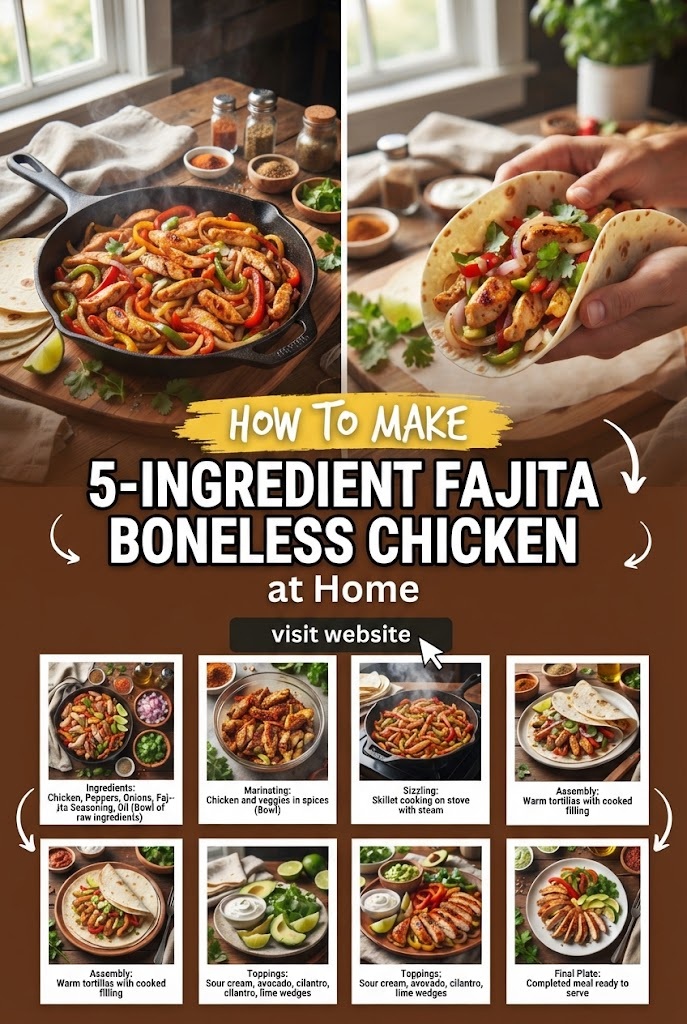
The aroma of sizzling peppers, the charred edges of succulent chicken, and the zesty kick of lime—fajitas are more than just a meal; they are an experience. Traditionally, Mexican-inspired fajitas might seem like a complex undertaking involving a long list of spices and hours of marinating. However, in the modern kitchen, efficiency is just as important as flavor. Enter the 5-ingredient fajita boneless chicken.
This guide explores how to achieve restaurant-quality results with minimal ingredients, focusing on quality, technique, and the science of the sizzle. Whether you are a busy parent, a student on a budget, or a culinary enthusiast looking for a quick weeknight win, this comprehensive guide will transform your kitchen into the best cantina in town.
Why the 5-Ingredient Approach Wins Every Time
In the world of gastronomy, there is a concept known as “minimalist cooking.” It’s the idea that by reducing the number of components, you allow the natural flavors of the primary ingredients to shine. For chicken fajitas, this means the sweetness of the bell peppers, the sharpness of the onions, and the savory depth of the chicken aren’t masked by an overabundance of additives.
The Benefits of Minimalism
- Reduced Prep Time: Fewer items to wash, chop, and measure.
- Cost-Effectiveness: High-quality ingredients are cheaper when you buy fewer of them.
- Dietary Transparency: With only five ingredients, it’s easy to track macros and avoid hidden preservatives.
- Versatility: This base recipe can be adapted into salads, bowls, or traditional wraps.
The Core Five: Selecting Your Ingredients
To make a truly spectacular 5-ingredient fajita, each component must be selected with care. When you aren’t using twenty ingredients, the quality of the five you do use becomes paramount.
1. The Protein: Boneless Chicken
While traditional fajitas used skirt steak, chicken has become the global favorite for its lean profile and ability to absorb flavor.
- Chicken Breast: The leanest option. It cooks quickly but can dry out if overhandled.
- Chicken Thighs: The secret weapon of pro chefs. Boneless, skinless thighs have a higher fat content, making them more forgiving and significantly more flavorful.
- The Cut: Always slice your chicken into even, thin strips. Slicing against the grain ensures a tender bite.
2. The Aromatics: Bell Peppers
Color isn’t just for aesthetics; it’s for flavor.
- Green Peppers: Offer a slightly bitter, earthy tone.
- Red, Orange, and Yellow Peppers: These are sweeter and provide a beautiful caramelization when seared.
- The Mix: A combination of at least two colors provides a balanced flavor profile.
3. The Base: Onions
Onions provide the foundational sweetness and “crunch” of the dish.
- Yellow Onions: The standard choice for their high sugar content which caramelizes beautifully.
- Red Onions: Offer a sharper bite and a pop of color.
- White Onions: Preferred in many traditional Mexican kitchens for their clean, sharp finish.
4. The Flavor Catalyst: Fajita Seasoning
To keep the ingredient count to five, we use a high-quality pre-mixed fajita seasoning or a homemade blend. A good seasoning must contain:
- Cumin: For that smoky, earthy base.
- Chili Powder: For a mild heat.
- Garlic and Onion Powder: For savory depth.
- Smoked Paprika: For a wood-fired aroma.
5. The Cooking Fat and Acid: Lime-Infused Oil
Technically two items, but in the world of 5-ingredient cooking, a “finishing oil” or a high-quality avocado oil counts as one. If you want to be a purist, use a high-smoke-point oil (like Grapeseed) and squeeze fresh lime at the very end. The acid in the lime is non-negotiable—it cuts through the fat and brightens the entire dish.
The Science of the Sizzle: Equipment and Technique
You can have the best ingredients in the world, but if your pan isn’t hot enough, you’re just making a stew. To get that iconic fajita “char,” you need to understand heat transfer.
The Power of Cast Iron
If you want restaurant-style results, a cast-iron skillet is your best friend. Cast iron retains heat better than stainless steel or non-stick pans. When the cold chicken hits the hot iron, the temperature doesn’t drop significantly, allowing for immediate searing (the Maillard reaction).
High Heat is Mandatory
Fajitas are a “fast and hot” dish. You want to cook the vegetables so they are charred on the outside but still crisp on the inside. Mushy peppers are the enemy of a good fajita.
Do Not Overcrowd the Pan
This is the most common mistake. If you put too much chicken and veg in the pan at once, the moisture released will cause the food to steam rather than sear. Cook in batches if necessary.
Step-by-Step: The Master Recipe
Preparation
- Slice the Chicken: Aim for 1/2-inch thick strips. Pat them dry with paper towels. Moisture on the surface of the meat prevents browning.
- The Vegetables: Slice onions and peppers into strips of similar width to the chicken to ensure even cooking.
- The Toss: In a large bowl, toss the chicken and vegetables with 2 tablespoons of oil and 2 tablespoons of fajita seasoning. Let it sit for 10 minutes (room temperature is fine).
The Cooking Process
- Preheat: Get your skillet smoking hot over medium-high heat.
- The Sear: Add the chicken in a single layer. Let it sit undisturbed for 2-3 minutes to develop a crust. Flip and cook for another 2 minutes. Remove chicken from the pan.
- The Veggies: Add the peppers and onions to the same pan. The moisture from the vegetables will help deglaze the flavorful brown bits (fond) left by the chicken.
- The Combine: Once the vegetables have charred edges, add the chicken back into the pan.
- The Finish: Turn off the heat and squeeze half a lime over the mixture. The steam will carry the citrus scent throughout the dish.
Beyond the Tortilla: Serving Suggestions
While a warm flour tortilla is the classic vessel, 5-ingredient fajita chicken is incredibly versatile.
1. The Low-Carb Fajita Bowl
Skip the bread and serve the mixture over a bed of cauliflower rice or shredded romaine lettuce. Add sliced avocado for healthy fats.
2. Fajita Nachos
Spread tortilla chips on a baking sheet, top with the chicken and pepper mixture, sprinkle some cheese, and broil for 2 minutes.
3. The Meal Prep Powerhouse
This recipe holds up exceptionally well in the fridge. Pack it with a side of black beans and quinoa for a high-protein lunch that tastes even better the next day as the flavors continue to meld.
Nutritional Breakdown: Why This Recipe is a Health Winner
In an era of processed foods, the 5-ingredient chicken fajita stands out as a nutritional powerhouse.
- Lean Protein: Chicken provides essential amino acids for muscle repair and satiety.
- Vitamin C: Bell peppers (especially red ones) contain more Vitamin C than oranges, boosting the immune system.
- Metabolic Boost: The capsaicin in the chili spices can slightly increase metabolic rate.
- Low Glycemic Index: Without the tortilla, this is an excellent meal for blood sugar management.
Common Mistakes and How to Avoid Them
1. Soggy Vegetables
Cause: Cooking over low heat or adding salt too early (which draws out water). Solution: Keep the heat high and sear quickly.
2. Rubberly Chicken
Cause: Overcooking. Chicken breast only needs a few minutes per side. Solution: Use a meat thermometer to pull the chicken at 165°F (74°C).
3. Lack of Flavor
Cause: Using old, dusty spices from the back of the pantry. Solution: Spices lose potency after 6 months. Freshness matters!
Expert Tips for Customization
Once you’ve mastered the 5-ingredient base, you can play with “free” ingredients (items like salt, pepper, or water that don’t usually count toward ingredient totals) to elevate the dish.
- The Charred Lime: Cut a lime in half and place it face down in the hot skillet for 1 minute before squeezing. It caramelizes the sugars in the juice for a deeper flavor.
- Fresh Herbs: A handful of chopped cilantro added at the very end provides a burst of freshness.
- Heat Control: If you like it spicy, toss in a sliced jalapeño with the bell peppers.
The History of the Fajita: From Campfires to Fine Dining
To truly appreciate the dish, one must look at its origins. The word “fajita” is derived from the Spanish word “faja,” meaning “belt” or “strip,” referring to the skirt steak used by Mexican vaqueros (cowboys) in Texas during the 1930s.
These cowboys were often given the less desirable cuts of meat as part of their pay. They learned to marinate these tough strips in lime juice and cook them over open campfires. What started as a meal of necessity evolved into a regional staple in the Rio Grande Valley. It wasn’t until the 1980s that fajitas exploded into the mainstream, thanks to restaurants like Ninfa’s in Houston. Today, chicken has surpassed beef in popularity due to its versatility and perceived health benefits.
Wine and Beverage Pairings
What you drink with your fajitas can enhance the spices and the sear of the meat.
- Beer: A cold Mexican lager with a lime wedge is the gold standard. The carbonation cleanses the palate after the oily, spicy flavors.
- Wine: Look for a high-acid white wine like a Sauvignon Blanc or a dry Riesling. If you prefer red, a light Zinfandel or a Tempranillo works beautifully with the smokiness of the cumin.
- Non-Alcoholic: An Agua Fresca (watermelon or hibiscus) provides a sweet, cooling contrast to the heat of the fajitas.
Frequently Asked Questions (FAQ)
Can I use frozen chicken?
Yes, but ensure it is completely thawed and patted dry. Frozen chicken often contains extra water/brine, which can lead to steaming instead of searing if not handled correctly.
What if I don’t have a cast-iron skillet?
A heavy-bottomed stainless steel pan is the next best thing. Avoid thin non-stick pans for this specific recipe, as they cannot safely reach the high temperatures required for a proper sear.
Is this recipe gluten-free?
The chicken and vegetables are naturally gluten-free. Check the label on your fajita seasoning to ensure there are no flour-based anti-caking agents.
How do I store leftovers?
Store in an airtight container for up to 4 days. To reheat, use a skillet rather than a microwave to maintain the texture of the peppers.
Making Your Own Fajita Seasoning (The 5th Ingredient)
If you choose to make your seasoning as your 5th ingredient, here is the ultimate ratio to keep in a jar:
- 3 parts Chili Powder
- 2 parts Cumin
- 1 part Smoked Paprika
- 1 part Garlic Powder
- 1 part Onion Powder
- A pinch of Dried Oregano
This blend is more vibrant than store-bought packets and lacks the cornstarch thickeners often found in commercial mixes.
Conclusion: The Joy of Simple Cooking
Mastering the 5-ingredient fajita boneless chicken is a testament to the fact that great cooking doesn’t have to be complicated. By focusing on high-quality protein, fresh vegetables, and the right heat application, you create a meal that is healthy, delicious, and incredibly satisfying.
The next time you’re staring at a pack of chicken in your fridge, remember that the best flavors are often the simplest. Fire up that skillet, slice those peppers, and enjoy the sizzle. Your kitchen is now a destination for authentic, effortless, and mouth-watering fajitas.
Summary of the 5-Ingredient Shopping List
- 1.5 lbs Boneless, Skinless Chicken (Thighs or Breasts)
- 3 Large Bell Peppers (Assorted Colors)
- 1 Large Yellow or White Onion
- 2 Tbsp High-Quality Fajita Seasoning
- 2 Tbsp Avocado or Grapeseed Oil (and a fresh lime)
With these items and the techniques outlined above, you are ready to conquer the art of the 5-ingredient fajita. Happy cooking!