In the heart of the Bayou, gumbo isn’t just a meal; it is a religion. It is a slow-simmered symphony of history, geography, and patience. To understand gumbo is to understand the blending of cultures—West African, French, Spanish, and Choctaw—all swirling together in a heavy cast-iron pot. When you set out to make a true Louisiana style gumbo, you aren’t just following a recipe; you are participating in a rite of passage.
The aroma that fills a kitchen when a dark roux begins to develop is unmistakable. It’s nutty, toasted, and slightly primal. It signals to everyone in the house that something special is happening. This isn’t a thirty-minute weeknight dinner. This is a labor of love that requires you to stand over the stove, stirring with intention, watching the flour and oil transform from a pale paste into the color of a well-worn copper penny, and eventually, into a shade of dark chocolate that would make a pastry chef nervous.
Whether you prefer the coastal influence of a seafood-heavy pot or the earthy, smoky depth of chicken and andouille, the foundation remains the same. It is built on the “Holy Trinity,” thickened by the skill of the cook, and seasoned with the spirit of the Gulf Coast. Today, we are going to dive deep into the mechanics of this legendary dish, stripping away the shortcuts and focusing on the techniques that separate a mediocre stew from a legendary Louisiana gumbo.
The Anatomy of an Authentic Roux
If the gumbo is a body, the roux is its soul. You cannot have one without the other. In Louisiana style gumbo, the roux serves two purposes: it provides a unique, toasted flavor profile and acts as the primary thickening agent. However, as a roux gets darker, its thickening power actually decreases, which is why we often supplement it with okra or filé powder later in the process.
The Fat and the Flour
To start, you need equal parts fat and flour by weight. In traditional country kitchens, lard or bacon drippings were the standard. In professional restaurant kitchens, we often use a high-smoke-point neutral oil like vegetable, canola, or grapeseed oil to ensure the roux doesn’t burn prematurely. Butter is delicious but risky for the dark chocolate stage because the milk solids tend to scorch.
The Stages of Color
- Blonde Roux: This takes about 5 minutes. It smells like cooked pie crust. It has maximum thickening power but very little flavor depth. This is for béchamel, not gumbo.
- Peanut Butter Roux: At around 15 minutes, the roux takes on the hue of a popular jar of Jif. The nuttiness starts to emerge. This is great for gravies.
- Copper or Penny Roux: Now we’re getting into Cajun territory. The aroma is toasted, and the color is vibrant.
- Dark Chocolate Roux: This is the “Holy Grail.” It is the color of a 70% cocoa bar. It is thin, fragrant, and provides that “swampy” richness that defines a true Louisiana style gumbo. If you see black specks, you’ve gone too far—throw it out and start over. There is no saving a burnt roux.
Sourcing Your Cajun Toolkit: The Ingredients
To achieve restaurant-quality results at home, you cannot compromise on your ingredients. Gumbo is a dish where the quality of the smoked meat and the freshness of the seafood dictate the final outcome.
The Proteins
- Andouille Sausage: This is non-negotiable. Andouille is a double-smoked, coarse-ground pork sausage seasoned with garlic, pepper, and onions. It provides the smoky backbone of the dish. If you can’t find authentic Louisiana andouille, a very smoky kielbasa can work in a pinch, but the flavor profile will shift.
- Chicken: I always recommend bone-in, skinless chicken thighs. They stay juicy during the long simmer, whereas breast meat turns into sawdust.
- Seafood: If you are making a seafood version, use wild-caught Gulf shrimp. If you can find blue crab (either whole cleaned crabs or jumbo lump meat), use it. The shells of the crab add an incredible sweetness to the broth.
The Holy Trinity and the “Pope”
In Louisiana cooking, the “Holy Trinity” consists of:
- Onions (usually yellow or white)
- Green Bell Peppers
- Celery
The ratio is generally two parts onion to one part each of pepper and celery. Then, we add the “Pope”—Garlic. Lots of it.
The Liquid Gold: Stock
Never use plain water. A great gumbo requires a high-quality stock. If you’re making seafood gumbo, use a stock made from boiled shrimp shells and crab bodies. For a meat-based gumbo, use a rich, gelatinous chicken stock. The stock should be warm when you add it to the roux to prevent clumping.
Essential Kitchen Equipment
You don’t need a kitchen full of gadgets, but a few specific items will make your life much easier:
- Heavy-Bottomed Cast Iron Dutch Oven: This is the most important tool. Cast iron distributes heat evenly, which is crucial when you are trying to maintain a consistent temperature for your roux. An enameled Dutch oven (like a Le Creuset) also works beautifully.
- A Long-Handled Wooden Spoon: You’re going to be stirring for a long time. A wooden spoon with a flat edge is best for scraping the bottom of the pot to ensure no flour sticks and burns.
- A Fine-Mesh Strainer: Useful for making your own stock or skimming fat off the top of the simmering gumbo.
Step-by-Step Instructions: The Master Method
1. The Sear
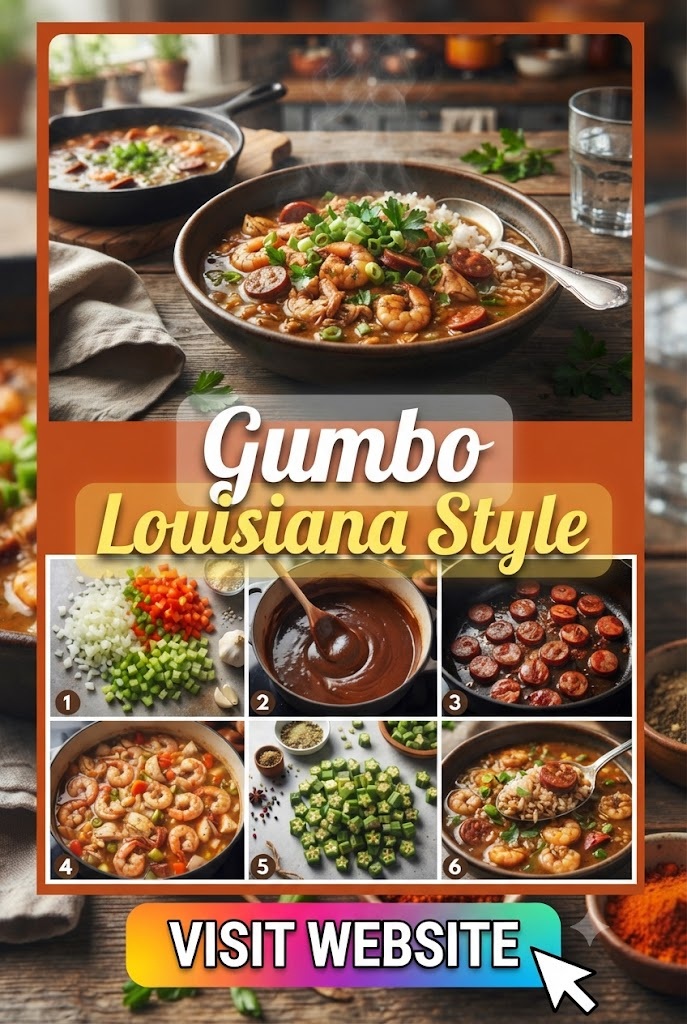
Start by browning your meats. In your Dutch oven, add a tablespoon of oil and sear the sliced andouille until the fat renders and the edges get crispy. Remove the sausage and set it aside. In the same fat, brown your chicken thighs. You aren’t trying to cook them through; you just want a deep brown crust on the outside. Remove the chicken and set aside.
2. The Great Roux Marathon
Lower the heat to medium-low. Add your oil and whisk in the flour. Now, start your timer. Constant motion is your friend. Stir in a figure-eight pattern, ensuring you hit every corner of the pot. As the roux darkens, the heat becomes more dangerous. If it’s browning too fast, lift the pot off the burner for a few seconds while continuing to stir. Once you hit that dark chocolate stage, move immediately to the next step.
3. “Waking the Trinity”
Dump your chopped onions, bell peppers, and celery directly into the hot roux. This serves two purposes: the moisture in the vegetables immediately drops the temperature of the roux, stopping the cooking process so it won’t burn, and it “sears” the vegetables in that nutty flour mixture. The smell at this moment is, quite frankly, intoxicating. Sauté the vegetables until they are soft and the onions are translucent. Stir in the minced garlic for the last 60 seconds.
4. The Slow Integration
Slowly ladle in your warm stock, one cup at a time, whisking constantly. At first, it will form a thick paste. Keep adding liquid and whisking until you have a smooth, velvety consistency. Once all the stock is in, add your browned sausage and chicken back into the pot.
5. The Long Simmer
Add your bay leaves, Creole seasoning (salt, cayenne, black pepper, garlic powder, onion powder), and a splash of Worcestershire sauce. Bring the pot to a gentle boil, then immediately reduce the heat to a very low simmer. Cover the pot halfway. Let it cook for at least 1.5 to 2 hours. This time allows the fats to emulsify and the flavors of the smoked meat to penetrate every drop of the liquid.
6. The Thickening Choice: Okra or Filé
If you like okra, sauté sliced okra in a separate pan until the “slime” (mucilage) is cooked out, then add it to the pot for the last 30 minutes. If you prefer filé powder (ground sassafras leaves), wait until the pot is completely off the heat. Stirring filé into a boiling pot will result in a stringy, unappealing texture.
7. The Finishing Touch
If you are adding seafood, toss in your shrimp and crab meat during the final 10 minutes of cooking. They only need a few minutes to turn pink and opaque. Overcooked shrimp are rubbery, and we want them to be tender and sweet.
Chef’s Secrets for Maximum Flavor
- The “Trilogy” of Thickening: While many people choose either roux, okra, or filé, many traditional Cajun cooks use a dark roux for flavor and okra for texture. The filé is often placed on the table for individuals to add to their own bowls.
- The Stock is Everything: If you want a gumbo that tastes like it came from a 5-star New Orleans kitchen, make your stock from scratch. Roast chicken bones or shrimp shells with aromatics before simmering. That extra layer of depth cannot be bought in a carton.
- Patience with the Roux: Do not try to rush a roux on high heat. You will end up with bitter, burnt flour. A slow roux is a happy roux. It should take you 30 to 45 minutes to get to the dark stage.
- The Day-After Rule: Like a good chili or beef stew, gumbo is always better the next day. The flavors meld and the spice mellows into a cohesive, complex profile. If you have the time, make it 24 hours before you plan to serve it.
Common Pitfalls to Avoid
- Using a Thin Pot: Thin stainless steel pots develop “hot spots” that will burn your roux in seconds. Stick to cast iron or heavy-bottomed aluminum.
- Too Much Liquid: Gumbo should be thick and hearty, not watery like a chicken noodle soup. If your gumbo looks too thin, let it simmer uncovered for a while to reduce.
- Burnt Garlic: Garlic burns much faster than the Trinity. Never add the garlic at the start of the roux or even at the start of the vegetable sauté. It only needs a minute of heat to release its oils.
- Over-Salting Early: As the gumbo simmers and reduces, the salt concentration increases. Additionally, andouille sausage is quite salty. Always wait until the very end to do your final salt adjustment.
Recipe Variations to Explore
Cajun vs. Creole Gumbo
The primary difference between Cajun (country) and Creole (city/New Orleans) gumbo is the use of tomatoes. Cajun gumbo almost never contains tomatoes and focuses on a very dark roux and smoked meats. Creole gumbo often includes canned or fresh tomatoes and leans more heavily on seafood. Both are delicious, but they offer very different flavor profiles.
Gumbo Z’Herbes
This is a rare, meatless version of gumbo (though some modern versions add ham) traditionally served during Lent, specifically on Holy Thursday. It features a massive amount of greens—mustard greens, collards, turnip greens, spinach, and beet tops. It is earthy, bright, and incredibly nutritious.
The “Wild Game” Gumbo
In the rural parts of Louisiana, gumbo is a way to use what the land provides. It isn’t uncommon to find gumbo made with duck, squirrel, or even venison sausage. Duck and andouille gumbo is particularly prized for the richness that duck fat adds to the roux.
What to Serve with Louisiana Style Gumbo
In Louisiana, there are very specific rules about what goes with gumbo.
- White Rice: Long-grain white rice is the standard. It should be cooked so the grains are separate and fluffy, never mushy. The rice acts as a sponge for the rich broth.
- Potato Salad: This is a polarizing one for outsiders, but many Cajuns serve a scoop of cold, creamy potato salad right in the middle of the gumbo bowl or on the side. The cold creaminess against the hot, spicy broth is a revelation.
- French Bread: A crusty loaf of Leidenheimer-style French bread is essential for mopping up every last drop of the liquid.
- Green Onions and Parsley: Always garnish with a handful of freshly chopped green onions and flat-leaf parsley for a burst of freshness and color.
Preserving the Magic: Storage and Reheating
Gumbo is an excellent candidate for meal prepping because it stores so well.
Refrigeration
Store your gumbo in an airtight container in the fridge for up to 3–4 days. In fact, many people find it tastes better on day two. The fat may solidify on the top; simply stir it back in when reheating.
Freezing
Gumbo freezes beautifully. If you’re freezing a seafood gumbo, be aware that the shrimp may get a little tougher upon reheating. For the best results, freeze the “base” (roux, veggies, sausage, chicken) and add fresh seafood when you reheat it. It will last in the freezer for up to 3 months.
Reheating
Reheat the gumbo slowly on the stovetop over medium-low heat. Avoid the microwave if possible, as it can heat unevenly and turn the proteins rubbery. If the gumbo has thickened too much in the fridge, add a splash of stock or water to loosen it up.
Detailed Nutrition Information (Per Serving)
Note: Values are estimates based on a standard bowl of chicken and sausage gumbo.
- Calories: 450–550 kcal
- Total Fat: 28g
- Saturated Fat: 8g
- Cholesterol: 95mg
- Sodium: 1,200mg (Variable based on stock and sausage)
- Total Carbohydrates: 22g
- Dietary Fiber: 3g
- Sugars: 4g
- Protein: 32g
Gumbo is a high-protein, satisfying meal, though it can be high in sodium. To reduce sodium, use a “no-salt-added” stock and adjust the seasoning yourself.
Frequently Asked Questions
Q: Can I make a roux in the oven? A: Yes! This is a “cheat code” for those who don’t want to stand over the stove. You can mix your flour and oil in a cast iron skillet and bake it at 350°F, stirring every 15–20 minutes until it reaches your desired color. It takes longer (about 90 minutes), but it’s much more hands-off.
Q: What if my roux breaks and the oil separates? A: This usually happens if the temperature changes too drastically. If your roux “breaks,” try whisking in a tablespoon of very hot water to see if it emulsifies back together. If that fails, you may need to start over.
Q: Do I have to use okra? A: Absolutely not. Okra is a traditional thickener, but if you find it “slimy” or simply don’t like the flavor, you can rely entirely on your roux and a bit of filé powder at the end.
Q: Why is my gumbo bitter? A: Bitterness is almost always a sign that the roux was scorched. Even a few seconds of burning can ruin the whole pot. If the roux smells like burnt popcorn or has black specks, it’s bitter. There is no way to mask this flavor—you must start over.
Q: Is gumbo gluten-free? A: Traditional gumbo is not gluten-free because the roux is made with all-purpose flour. However, you can make a successful gluten-free roux using a high-quality gluten-free all-purpose flour blend or even toasted rice flour.
Q: Can I make this in a slow cooker? A: You can, but you still have to make the roux on the stovetop. You cannot skip the roux-making process. Once the roux and the Trinity are combined with the stock, you can transfer everything to a slow cooker and cook on low for 6–8 hours.
Q: What is filé powder exactly? A: Filé is made from the dried and ground leaves of the sassafras tree. It was introduced to the settlers by the Choctaw Indians. It has a mild, root-beer-adjacent earthy flavor and acts as a powerful thickener.
Q: How do I get the “slime” out of okra? A: The “slime” is released when okra is boiled. To minimize it, sauté the sliced okra in a separate pan with a little oil and a splash of vinegar or lemon juice until the strands of mucilage disappear before adding it to the gumbo.
Final Thoughts
Louisiana style gumbo is more than just a recipe; it’s a cultural heirloom. It represents the resilience and creativity of the people of the Gulf Coast, who took humble ingredients and transformed them into one of the world’s most complex and celebrated dishes.
When you sit down to a bowl of gumbo, you are tasting a timeline of history. You’re tasting the smoke of the andouille, the sweetness of the Gulf, and the charred, nutty depth of a perfectly executed roux. It’s a dish that invites conversation, demands seconds, and reminds us that some things in life are simply worth the wait.
So, grab your heaviest pot, put on some Zydeco music, and take your time. The Bayou is waiting for you in your own kitchen. Whether it’s a rainy Tuesday or a festive Mardi Gras celebration, there is never a wrong time for a pot of authentic Louisiana gumbo. Enjoy the process, trust your senses, and most importantly, Laissez les bons temps rouler! (Let the good times roll!)