
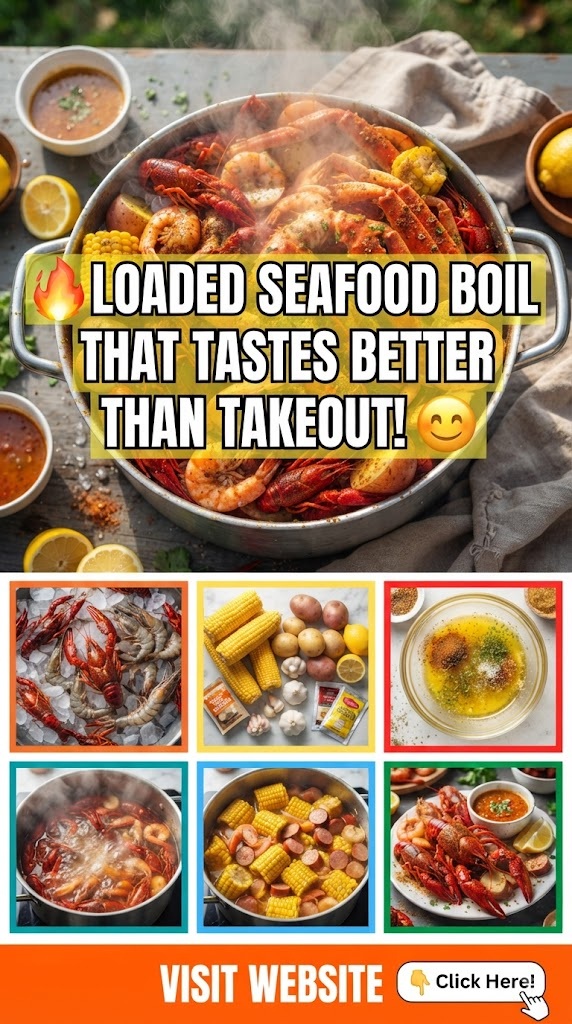
There is something inherently primal and profoundly joyful about a seafood boil. It’s not just a meal; it’s a sensory event that demands you roll up your sleeves, put away your phone, and dive in with both hands. Imagine a table draped in newspaper, steaming piles of bright red crawfish and snow crab legs, gold-flecked corn on the cob, and succulent shrimp, all glistening under a velvet coating of garlic-infused butter and fiery Cajun spices. The air fills with the aroma of lemon, bay leaves, and old-fashioned coastal soul. This is the ultimate comfort food for those who believe that the best flavors are found when things get a little messy.
Whether you are hosting a backyard summer bash or a cozy indoor winter gathering, a seafood boil is the ultimate equalizer. It brings people together, forcing a slow, methodical pace as you crack shells and dip tender meat into pools of zesty sauce. Today, we aren’t just making a basic pot of boiled fish; we are constructing a “Loaded with Flavor” masterpiece that rivals the best “Low Country” boils of South Carolina and the spicy “Boil Bags” of the Gulf Coast.
The Foundation: Why the “Loaded” Style Wins
A traditional boil is often simple—water, salt, seasoning, and seafood. But a “Loaded” boil takes things to a different dimension. We are talking about layers of flavor. We season the water to infuse the meat from the inside out, and then we toss the finished product in a signature “smackalicious” butter sauce that coats every nook and cranny.
The goal is a balance of textures and tastes: the snap of the sausage, the creaminess of the potatoes, the sweetness of the corn, and the briny richness of the ocean’s finest offerings. When you get it right, every bite is a different experience. One moment you’re hitting a spicy notes from a peppercorn, the next you’re tasting the citrusy brightness of a lemon wedge that’s been simmering alongside the crab.
Anatomy of the Perfect Seafood Selection
When we say “loaded,” we mean it. Variety is the spice of life, and in a seafood boil, it’s the key to a complex flavor profile. Here is what you should be looking for at the fish market:
1. The Heavy Hitters: Crabs and Lobster
For a truly impressive spread, Snow Crab legs or King Crab legs are non-negotiable. They provide the visual “wow” factor and the sweet, delicate meat that everyone hunts for. If you’re feeling particularly indulgent, adding lobster tails split down the middle allows the seasoned broth to penetrate the meat, turning a luxury ingredient into a flavor sponge.
2. The Crowd Favorites: Shrimp and Crawfish
Shrimp are the workhorses of the boil. Always go for “easy-peel” or shell-on shrimp. The shell protects the delicate meat from overcooking and holds onto the seasoning. If you can find live crawfish (especially during peak season in the spring), they add an authentic earthy flavor that defines a true Southern boil.
3. The Briny Bits: Clams and Mussels
While not always in a standard boil, adding littleneck clams or blue mussels adds a sophisticated depth to the pot. As they open up, they release their natural juices into the broth, enhancing the overall umami profile of the meal.
4. The Savory Supporting Cast: Smoked Sausage
Do not skip the sausage. A high-quality Andouille sausage provides a smoky, spicy counterpoint to the sweet seafood. If you can’t find Andouille, a good Kielbasa or smoked beef sausage works wonders. The fat from the sausage renders into the water, adding a richness that seafood alone cannot provide.
Essential Ingredients for the Flavor Base
Before the seafood even touches the pot, the water needs to be a concentrated elixir of flavor. You aren’t just boiling water; you’re making a giant pot of “seafood tea.”
- The Aromatics: Onions (halved), entire heads of garlic (cut crosswise), and lemons (quartered). These are the pillars of the scent profile.
- The Spice Mix: A heavy hand of Old Bay, Zatarain’s, or a homemade blend of cayenne, paprika, garlic powder, and onion powder.
- The Hidden Gems: Bay leaves, whole peppercorns, and even a splash of beer (a light lager works best) or white wine. The alcohol helps extract flavors from the spices that water alone can’t reach.
- Salt: Do not be afraid. The water should taste like the ocean. Much of the salt stays in the water, but it’s necessary to season the potatoes and corn properly.
The Secret Garlic Butter “Drip” Sauce
If the boil is the heart of the meal, the sauce is the soul. Many people make the mistake of just serving melted butter on the side. We are going bigger. We’re making a Loaded Garlic Butter Drip that you will want to put on everything.
What you’ll need:
- Unsalted Butter: At least 3-4 sticks. Trust me, you’ll need it.
- Fresh Garlic: Minced until it’s almost a paste.
- Onion: Finely grated so it melts into the butter.
- Lemon Pepper Seasoning: For that zesty kick.
- Cajun Seasoning: To tie it back to the boil spices.
- Brown Sugar: Just a tablespoon to balance the heat and acidity.
- Fresh Parsley: For a pop of color and freshness.
You’ll simmer these together until the garlic is soft and the butter has turned a deep, burnt orange color from the spices. This sauce is what transforms the meal from “good” to “legendary.”
Kitchen Equipment: Tools of the Trade
You don’t need a professional kitchen, but a few specific items make the process much smoother:
- A Massive Stockpot: We are talking 16 to 30 quarts depending on your crowd size. If you’re cooking outdoors, a propane burner and a turkey fryer pot are the gold standard.
- A Large Strainer or Basket: Most large pots come with an insert. This is vital for lifting everything out at once so the seafood doesn’t sit in the hot water and overcook while you’re trying to fish it out with a slotted spoon.
- A Long Paddle or Spoon: To stir the heavy ingredients and ensure the seasoning is distributed.
- Nutcrackers and Picks: Don’t make your guests use their teeth! Provide the tools needed to get every morsel of meat out of those crab legs.
- Newspaper or Butcher Paper: For the “dump.” There is no better way to serve a boil than spreading it across a long table.
Step-by-Step Instructions: The Staggered Method
The biggest mistake in seafood boils is throwing everything in at once. Potatoes take 20 minutes; shrimp take 3 minutes. If you put them in together, you’ll have perfect potatoes and rubbery, inedible shrimp. Follow this timeline:
Step 1: Prep the Broth
Fill your pot halfway with water. Add your lemons, onions, garlic, bay leaves, and a generous amount of your dry seasoning. Bring this to a rolling boil and let it “steep” for about 15 minutes before adding any food. This ensures the flavor is fully developed.
Step 2: The “Long Haul” Ingredients
Add your halved red potatoes. These need the most time to get tender and absorb the salt. Let them boil for about 8–10 minutes.
Step 3: The Mid-Range Additions
Add the smoked sausage and the corn on the cob (cut into 3-inch rounds). The sausage will start releasing its oils, and the corn will begin to soak up the spicy broth. Boil for another 5 minutes.
Step 4: The Crab and Lobster
Add your crab legs and lobster tails. Since these are often sold pre-cooked and frozen, you are essentially heating them through and infusing them with the broth. If they are raw, they need about 6–8 minutes.
Step 5: The Final Flash
Turn off the heat entirely. Now, throw in your shrimp. The residual heat of the massive pot of water is enough to cook the shrimp perfectly in about 2–3 minutes without making them tough. This “soak” method is the secret of the pros.
Step 6: The Drain and Toss
Lift the basket and let the water drain away. Transfer the steaming heap to a massive bowl or directly onto your paper-lined table. While it’s still piping hot, pour over half of your Garlic Butter Drip and toss everything until it’s glistening. Serve the remaining sauce in small cups for individual dipping.
Pro Tips for the Ultimate Flavor Profile
- The “Soak” is Key: In Louisiana, they often turn the heat off and let the seafood sit in the seasoned water for 15–20 minutes. This is called “the soak.” It allows the seafood to absorb the spices without overcooking. If you choose this method, add ice to the pot to drop the temperature and stop the cooking process while the flavor continues to penetrate.
- Use High-Quality Butter: Since butter is a primary flavor, don’t go for the cheap stuff. A high-fat European-style butter will give the sauce a much silkier texture.
- Don’t Overcrowd: If the pot is too packed, the water temperature will drop too significantly when you add ingredients, leading to uneven cooking. Work in batches if necessary.
- Squeeze Fresh Lemon at the End: A final hit of fresh acid right before eating cuts through the heavy butter and wakes up the palate.
Common Mistakes to Avoid
- Under-seasoning the Water: It might look like a lot of spice, but remember that most of it stays in the water. Be aggressive with your seasonings.
- Using Old Seafood: Seafood should smell like the ocean, not “fishy.” If you’re using frozen, thaw it properly in the refrigerator overnight.
- Overcooking the Corn: Corn can become mushy if left in the boil too long. You want it to have a crisp “snap.”
- Forgetting the Napkins: This is a messy meal. Have rolls of paper towels ready.
Recipe Variations for Every Palate
While the Cajun style is king, you can pivot the flavor profile easily:
- The Low Country Style: Skip the heavy cayenne and focus more on Old Bay and sweet Vidalia onions. This is a milder, more herb-forward version popular in the Carolinas.
- The Pacific Northwest Style: Use Dungeness crab, Manila clams, and add a few sprigs of fresh dill to the boiling liquid. Serve with a side of sourdough bread to soak up the juices.
- The Asian-Fusion “Boil Bag” Style: Take the finished boil and toss it in a sauce made of butter, ginger, lemongrass, sriracha, and a splash of soy sauce. This “Viet-Cajun” style is taking the culinary world by storm.
Hosting the Perfect Seafood Boil Party
A seafood boil is a social contract. It says, “We are going to get messy together.” To make it a success:
- The Atmosphere: Keep it casual. String lights, some upbeat zydeco or country music, and plenty of cold drinks.
- The Drinks: Beer is the classic choice—think light lagers or IPAs that can stand up to the spice. For non-alcoholic options, a tart lemonade or sweetened iced tea provides the perfect contrast to the heat.
- The Cleanup Station: Set up a “wash station” with bowls of warm water, lemon slices (to cut the grease), and plenty of towels. Your guests will thank you.
- The “Dump”: There is a psychological thrill when the chef carries the steaming basket to the table and dumps it out. Don’t skip this theatrical moment!
Storage and Reheating Tips
Let’s be honest: seafood is always best fresh. However, if you have leftovers, you can save them.
- Storage: Remove the meat from the shells if possible and store it in an airtight container with some of the butter sauce. It will stay good in the fridge for up to 2 days.
- Reheating: Do NOT microwave seafood; it will turn into rubber. Instead, steam it gently or sauté it in a pan with a little extra butter and a splash of water over low heat just until warmed through.
- Repurposing: Leftover boil ingredients make an incredible seafood chowder or a “Boil Fried Rice” the next day.
Frequently Asked Questions
Can I use frozen seafood?
Absolutely. In fact, unless you live right on the coast, “fresh” seafood at the grocery store was likely previously frozen anyway. Just ensure it is fully thawed before it goes into the boiling pot to maintain temperature control.
How much seafood should I buy per person?
A good rule of thumb is 1 to 1.5 pounds of total “boil” per person. This includes the potatoes, sausage, and corn. For just the seafood, aim for about 1/2 to 3/4 pound per person.
Is a seafood boil healthy?
Seafood is a great source of lean protein and omega-3 fatty acids. The potatoes and corn provide complex carbs. The “unhealthy” part usually comes from the butter sauce. If you’re watching your intake, you can go light on the butter toss and rely on the seasoned boiling liquid for flavor.
What if I don’t have a huge pot?
You can do a “Sheet Pan Seafood Boil” in the oven! Toss all the ingredients (pre-boil the potatoes and corn for 10 minutes first) in the butter sauce, spread them on a baking sheet, and roast at 400°F for about 12-15 minutes. It’s not quite the same as the traditional boil, but the flavor is still incredible.
Can I do this indoors?
Yes, but make sure your kitchen is well-ventilated. Boiling a massive pot of spiced water creates a lot of steam and a very strong (though delicious) aroma that will linger in your curtains for days if you don’t have a good exhaust fan.
Why This Recipe Works
This recipe is designed to hit every part of your palate. The saltiness of the broth, the sweetness of the crab, the heat of the cayenne, the acidity of the lemon, and the richness of the butter create a “perfect storm” of culinary satisfaction. By using the staggered cooking method, we ensure that the textures are just as impressive as the flavors. No one wants mushy shrimp or hard potatoes, and this guide prevents those common pitfalls.
Final Thoughts
The beauty of a seafood boil lies in its imperfection. It’s okay if a potato gets a little smashed or if the sauce drips down your chin. It’s a meal that celebrates the ingredients and the people you share them with. By focusing on a “loaded” approach—layering flavors in the water and then doubling down with a signature butter sauce—you aren’t just cooking; you’re creating a memory.
So, gather your friends, find the biggest pot you can, and get ready to experience the most flavorful feast of your life. The shells will crack, the laughter will flow, and your kitchen will smell like a dream. Happy boiling!
Summary of Ingredients for the Master Shopping List
The Boil Pot:
- 5 lbs Large Shrimp (shell-on)
- 4 lbs Snow Crab Legs
- 2 lbs Andouille Sausage (sliced into rounds)
- 3 lbs Baby Red Potatoes
- 6 ears of Corn (halved)
- 2 gallons Water
- 1 cup Old Bay or Cajun Seasoning
- 4 Lemons (halved)
- 2 large Yellow Onions (quartered)
- 2 heads of Garlic (top sliced off)
- 4 Bay Leaves
- 1 bottle of Light Beer (optional)
The Garlic Butter Drip:
- 1.5 lbs Unsalted Butter
- 1/4 cup Minced Garlic
- 1 tbsp Lemon Pepper
- 2 tbsp Cajun Seasoning
- 1 tbsp Smoked Paprika
- 1 tbsp Brown Sugar
- 1/4 cup Fresh Parsley (chopped)
- Juice of 1 Lemon
Serving Essentials:
- Extra Lemon Wedges
- Hot Sauce (Crystal or Louisiana style)
- Cold beverages
- Newspaper for the table
- Wet wipes or plenty of paper towels
Conclusion
Mastering the seafood boil is a rite of passage for any home cook who loves bold, unapologetic flavors. It’s a dish that rewards patience during the prep and enthusiasm during the eating. While the ingredients might seem numerous, the process is straightforward: season your water well, time your additions carefully, and never skimp on the garlic butter.
When you finally pour that steaming bounty onto the table, you’ll see why this tradition has endured for generations. It’s a celebration of the sea, a tribute to Southern spice, and the ultimate way to feed the people you love. Now, go forth and boil!