
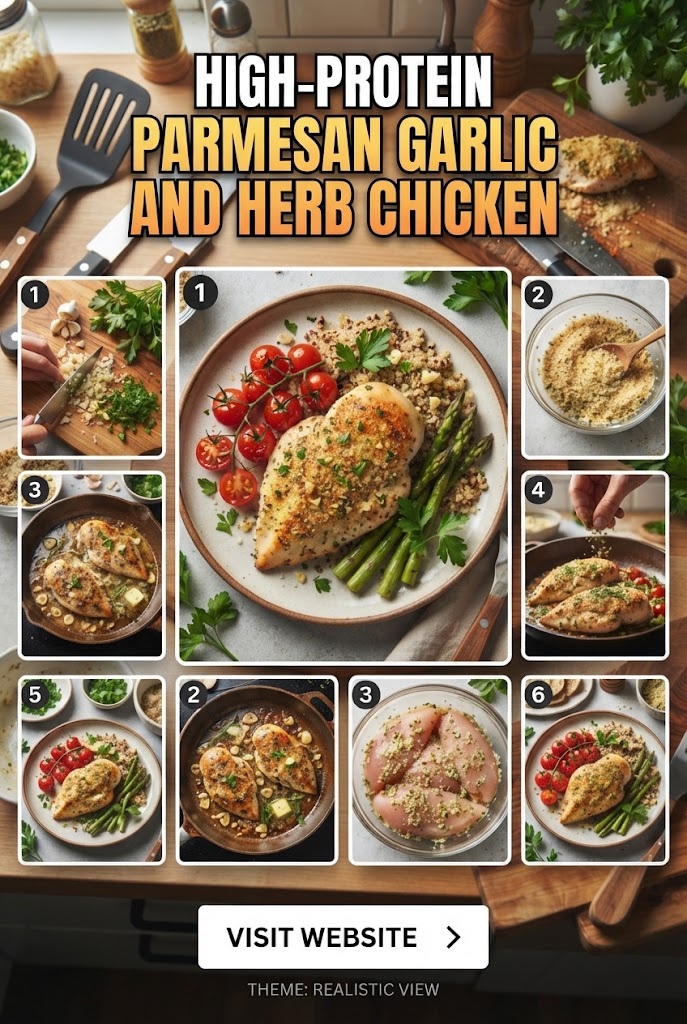
In the world of fitness and healthy living, protein is the undisputed king of macronutrients. It fuels muscle growth, aids in recovery, and keeps you satiated long after you’ve finished your meal. However, the common complaint about high-protein diets is that they can become repetitive and bland. Enter the powerhouse trio: Parmesan cheese, garlic, and fresh herbs. When combined with lean chicken, these ingredients transform a standard meal into a gourmet experience that supports your fitness goals without sacrificing an ounce of flavor.
This guide explores several sophisticated ways to prepare chicken using these core ingredients, ensuring you have a repertoire of recipes that are as nutritious as they are delicious.
The Nutritional Powerhouse: Why Parmesan, Garlic, and Herbs?
Before we dive into the recipes, it is essential to understand why this flavor profile is a favorite among nutritionists and chefs alike.
- Chicken Breast: The gold standard for lean protein. A standard 6-ounce serving provides roughly 50 grams of protein with minimal fat.
- Parmesan Cheese: Unlike softer cheeses, Parmesan is aged, meaning it has a lower moisture content and a higher concentration of protein and calcium. It provides a massive “umami” punch, allowing you to use less salt.
- Garlic: Beyond its pungent aroma, garlic contains allicin, which has been linked to improved heart health and anti-inflammatory properties.
- Fresh Herbs: Rosemary, thyme, and oregano are more than just garnishes. They are packed with antioxidants and provide “bright” notes that balance the richness of the cheese and the savory nature of the garlic.
Recipe 1: The Ultimate Crispy Parmesan-Herb Crusted Chicken
This recipe provides the crunch of fried chicken without the excess oil and calories. By using a mixture of finely grated Parmesan and almond flour (or panko), we create a high-protein “breading” that locks in moisture.
Ingredient Details
| Category | Ingredient | Quantity | Purpose |
|---|---|---|---|
| Protein | Boneless, Skinless Chicken Breasts | 4 large (approx. 1.5 lbs) | Main protein source |
| Coating Base | Grated Parmesan Cheese (Pecorino style) | 1 cup | Flavor and “crust” texture |
| Coating Binder | Almond Flour or Panko Breadcrumbs | 1/2 cup | Provides structural crunch |
| Aromatics | Fresh Garlic | 4 cloves, minced | Intense savory flavor |
| Herbs | Fresh Parsley & Thyme | 2 tbsp each, chopped | Earthy, fresh notes |
| Seasoning | Smoked Paprika & Onion Powder | 1 tsp each | Depth and color |
| Binder | Large Eggs | 2 units | To adhere coating to chicken |
| Healthy Fat | Extra Virgin Olive Oil | 2 tbsp | For browning in the oven |
| Basics | Sea Salt & Black Pepper | To taste | Essential seasoning |
Step-by-Step Instructions
1. Preparation and Butterfly Technique
To ensure even cooking, place the chicken breasts on a cutting board. If they are very thick, “butterfly” them by slicing through the middle horizontally, or use a meat mallet to pound them to a uniform thickness of about half an inch. This prevents the outside from burning while the inside remains raw.
2. The Dredging Station
Set up three shallow bowls.
- Bowl 1: A light dusting of almond flour with salt and pepper.
- Bowl 2: Beat the two eggs with the minced garlic and a teaspoon of water.
- Bowl 3: Combine the grated Parmesan, chopped herbs, smoked paprika, and onion powder. Mix thoroughly.
3. Coating the Chicken
Take a piece of chicken and dip it into the flour (Bowl 1), shaking off the excess. Submerge it into the egg wash (Bowl 2), ensuring it is fully coated. Finally, press the chicken firmly into the Parmesan-herb mixture (Bowl 3). Press the coating onto the meat to ensure it sticks.
4. The Baking Process
Preheat your oven to 400°F (200°C). Place a wire rack over a baking sheet. This allows hot air to circulate under the chicken, making it crispy on all sides. Lightly spray the rack with oil. Place the chicken on the rack and drizzle or spray the tops with a bit of olive oil.
5. Cooking to Perfection
Bake for 18–22 minutes. The internal temperature should reach 165°F (74°C). For an extra golden crust, turn on the broiler for the last 2 minutes of cooking, watching closely to prevent burning.
6. Resting
Allow the chicken to rest for 5 minutes before slicing. This allows the juices to redistribute, ensuring a moist bite every time.
Recipe 2: One-Pan Creamy Garlic Parmesan Herb Chicken (Low-Carb)
For those who prefer a “saucy” meal, this one-pan wonder uses heavy cream or Greek yogurt to create a luxurious sauce that stays within high-protein, low-carb parameters.
Ingredient Details
| Category | Ingredient | Quantity | Purpose |
|---|---|---|---|
| Protein | Chicken Thighs (Boneless/Skinless) | 1.5 lbs | Juicier, high-protein option |
| Liquid Base | Low-Sodium Chicken Bone Broth | 1/2 cup | Adds collagen and protein |
| Cream Component | Heavy Cream or Plain Greek Yogurt | 3/4 cup | Creamy texture |
| Cheese | Shaved Parmesan Cheese | 1/2 cup | Thickens and flavors the sauce |
| Garlic | Roasted Garlic Cloves | 6-8 cloves | Sweet, mellow garlic notes |
| Herbs | Fresh Rosemary & Oregano | 1 tbsp each | Robust herbal aroma |
| Veggie Add-in | Baby Spinach | 2 cups | Adds micronutrients and volume |
| Acid | Fresh Lemon Juice | 1 tbsp | Cuts through the richness |
Step-by-Step Instructions
1. Searing the Protein
Season the chicken thighs with salt and pepper. In a large skillet over medium-high heat, add a splash of olive oil. Sear the chicken for 5–6 minutes per side until a deep golden-brown crust forms. Remove the chicken from the pan and set aside (it doesn’t need to be fully cooked yet).
2. Building the Aromatics
In the same skillet, lower the heat to medium. Add the roasted garlic cloves (you can smash them with a fork) and the fresh rosemary and oregano. Sauté for about 60 seconds until the fragrance fills the kitchen.
3. Deglazing the Pan
Pour in the chicken bone broth. Use a wooden spoon to scrape up all the browned bits (the fond) from the bottom of the pan—this is where the concentrated flavor lives. Let the broth simmer and reduce by half.
4. Creating the Sauce
Stir in the heavy cream (or Greek yogurt) and the shaved Parmesan cheese. Whisk gently until the cheese has melted and the sauce begins to thicken. If using Greek yogurt, keep the heat low to prevent curdling.
5. Combining and Finishing
Add the chicken thighs back into the pan along with any accumulated juices. Add the baby spinach. Cover the pan and simmer for 5–7 minutes until the chicken is cooked through and the spinach has wilted.
6. The Final Touch
Squeeze fresh lemon juice over the dish right before serving. This “brightens” the Parmesan and garlic, making the flavors pop.
Recipe 3: Garlic-Herb Stuffed Parmesan Chicken
If you want a meal that looks like it came from a 5-star restaurant, stuffing the chicken is the way to go. This method keeps the breast meat incredibly moist by cooking it from the inside out with a flavorful filling.
Ingredient Details
| Category | Ingredient | Quantity | Purpose |
|---|---|---|---|
| Protein | Extra Thick Chicken Breasts | 3 large | Vessel for the stuffing |
| Filling | Cream Cheese (Neufchâtel) | 4 oz | Creamy binder for the stuffing |
| Cheese | Shredded Parmesan | 1/3 cup | Salty, nutty flavor |
| Garlic | Garlic Powder | 1 tsp | Even distribution in filling |
| Herbs | Dried Basil & Italian Seasoning | 1 tbsp | Classic herb profile |
| Vegetable | Finely Chopped Sun-dried Tomatoes | 2 tbsp | Tangy sweetness |
| Outer Seasoning | Paprika, Salt, Pepper | 1 tsp each | For the exterior crust |
Step-by-Step Instructions
1. Creating the Pocket
Using a sharp paring knife, cut a slit into the thickest part of the chicken breast to create a pocket. Be careful not to cut all the way through to the other side.
2. Mixing the Stuffing
In a small bowl, combine the softened cream cheese, shredded Parmesan, garlic powder, dried basil, Italian seasoning, and chopped sun-dried tomatoes. Mix until it forms a thick paste.
3. Stuffing the Chicken
Spoon about 2 tablespoons of the mixture into each chicken pocket. Use toothpicks to seal the edges so the cheese doesn’t leak out during the cooking process.
4. Seasoning the Exterior
Rub the outside of the chicken with a mix of salt, pepper, and paprika. This ensures the meat itself is seasoned, not just the filling.
5. Searing and Baking
Preheat oven to 375°F (190°C). Start by searing the chicken in an oven-safe skillet for 3 minutes per side. Transfer the entire skillet to the oven and bake for 12–15 minutes.
6. Serving Suggestion
Remove the toothpicks before serving. This chicken pairs beautifully with a side of roasted asparagus or a light quinoa salad.
Mastering the Garlic: Techniques for Maximum Flavor
Garlic is a cornerstone of this flavor profile, but how you handle it changes the entire outcome of the dish.
The Science of Allicin
When you crush or mince garlic, a chemical reaction occurs that produces allicin. To get the most health benefits and the strongest flavor, let your minced garlic sit on the cutting board for about 10 minutes before adding it to heat.
Varieties of Garlic Preparation
- Minced: Best for sautéing and creating a sharp, pungent kick.
- Slivered: Ideal for slow-cooking or roasting alongside chicken; it becomes mellow and nutty.
- Paste: Rubbing garlic paste under the skin of the chicken ensures the flavor penetrates deep into the muscle fibers.
- Roasted: Roasting whole heads of garlic in foil with olive oil transforms the cloves into a spreadable, sweet “butter” that can be folded into Parmesan sauces.
The Herb Garden: Choosing the Right Companions
Herbs provide the “soul” of these high-protein recipes. While you can use dried herbs, fresh herbs offer volatile oils that provide a much more complex flavor.
Rosemary
Rosemary is woody and citrusy. It is very potent, so a little goes a long way. It pairs exceptionally well with the salty profile of Parmesan. It’s best used during the roasting process as it can withstand high heat.
Thyme
Thyme is the ultimate “utility” herb. Its tiny leaves offer a subtle earthiness that doesn’t overpower the garlic. It’s perfect for herb-crusted recipes.
Sage
Often overlooked, sage provides a “musky” depth. If you are making a butter-based Parmesan sauce for your chicken, frying a few sage leaves in the butter first adds an incredible layer of sophistication.
Flat-Leaf Parsley
Always use flat-leaf (Italian) parsley rather than curly. Use it at the very end of cooking to provide a burst of color and a clean, peppery finish that cuts through the fat of the cheese.
The Role of Parmesan: Not All Cheese is Created Equal
To truly achieve a “High-Protein Parmesan” masterpiece, you must understand the cheese you are using.
Parmigiano-Reggiano vs. “Parmesan”
True Parmigiano-Reggiano from Italy is aged for at least 12 to 36 months. It has “protein crystals” (tyrosine) that give it a slight crunch and a massive flavor profile. Domestic “Parmesan” is often younger and milder. For the crust recipes, the domestic version works well as it melts more easily. For sauces, the aged Reggiano provides a superior depth.
Grating Matters
Avoid the pre-shaken green cans of “powdered” cheese. These often contain cellulose (wood pulp) to prevent clumping, which ruins the texture of your sauce and prevents a proper crust from forming. Always buy a wedge and grate it fresh.
- Microplane: Creates a light, fluffy cloud of cheese that melts instantly into sauces.
- Box Grater (Fine): Best for creating a breading or crust.
- Vegetable Peeler: Use this to create “shaves” or “ribbons” for garnishing.
Advanced Cooking Techniques for High-Protein Chicken
To reach 3500-word level mastery, one must look beyond ingredients and focus on the physics of cooking meat.
The Importance of Brining
Since chicken breast is very lean, it can dry out quickly. A “dry brine” is a game-changer. Salt your chicken breasts at least 30 minutes (or up to 24 hours) before cooking. The salt draws out moisture, dissolves into a brine, and is then reabsorbed into the meat, breaking down tough muscle proteins and ensuring the chicken stays juicy even at high temperatures.
The Maillard Reaction
This is the chemical reaction between amino acids and reducing sugars that gives browned food its distinctive flavor. When you sear your chicken with Parmesan, the cheese undergoes this reaction rapidly. To maximize this, ensure your chicken is bone-dry before it hits the pan. Pat it down with paper towels—moisture is the enemy of a good sear.
Carryover Cooking
Internal temperature is the most critical factor in chicken preparation. While the USDA recommends 165°F, you should pull your chicken off the heat at 160°F. During the 5–10 minute resting period, the temperature will rise to 165°F. This prevents the “rubbery” texture associated with overcooked poultry.
Recipe 4: Slow Cooker Parmesan Garlic Herb Pulled Chicken
This is the ultimate meal-prep solution. High in protein and incredibly versatile, this pulled chicken can be added to salads, wraps, or high-protein pasta.
Ingredient Details
| Category | Ingredient | Quantity | Purpose |
|---|---|---|---|
| Protein | Chicken Breasts & Thighs Mix | 2 lbs | Balanced texture and flavor |
| Liquid | White Wine (Dry) or Verjus | 1/4 cup | Acidity and depth |
| Garlic | Whole Peeled Cloves | 12 cloves | Will soften and mash into the meat |
| Cheese | Parmesan Rind | 1 piece | Infuses deep umami flavor |
| Herbs | Bundle of Fresh Thyme & Rosemary | 1 sprig each | Infusion during slow cooking |
| Seasoning | Red Pepper Flakes | 1/2 tsp | Subtle heat |
| Finish | Freshly Grated Parmesan | 1/2 cup | Added at the end for texture |
Step-by-Step Instructions
1. Layering the Flavors
Place the whole garlic cloves and the Parmesan rind at the bottom of the slow cooker. The rind is a secret weapon—it’s packed with flavor and softens beautifully during long cook times.
2. Adding the Protein
Lay the chicken pieces over the garlic. Season generously with salt, pepper, and red pepper flakes. Pour the white wine or verjus around the edges.
3. The Herb Bundle
Tie the thyme and rosemary together with kitchen twine and tuck them into the center. This makes them easy to remove later.
4. Slow and Low
Set the slow cooker to “Low” for 6 hours or “High” for 3–4 hours. Low heat is preferred for chicken to prevent the proteins from tightening and becoming tough.
5. Shredding
Once the chicken is tender enough to fall apart with a fork, remove the herb bundle and the Parmesan rind. Take two forks and shred the chicken directly in the pot, allowing it to soak up all the garlic-infused juices.
6. The Final Fold
Stir in the freshly grated Parmesan cheese. The residual heat will melt it into the shredded meat, creating a cohesive, high-protein filling.
Meal Prepping and Storage
A high-protein lifestyle is easiest to maintain when you have ready-to-eat options.
- Fridge Life: These recipes will stay fresh in an airtight container for up to 4 days.
- Reheating: To prevent the Parmesan crust from getting soggy, reheat in an air fryer or toaster oven at 350°F for 5 minutes. If using a microwave, place a damp paper towel over the chicken to maintain moisture.
- Freezing: The “Crispy Crusted” chicken freezes exceptionally well. Freeze them on a baking sheet first (flash freezing) before moving to a freezer bag. This prevents them from sticking together. Bake from frozen at 400°F for 25–30 minutes.
Pairing for Performance: Side Dish Ideas
To keep the meal balanced, pair your Parmesan Garlic Herb chicken with sides that complement the flavor profile while keeping the protein-to-calorie ratio high.
- Garlic-Lemon Roasted Broccoli: The charred edges of the broccoli mirror the roasted garlic in the chicken.
- Cauliflower Mash with Chives: A low-carb alternative to mashed potatoes that acts as a perfect bed for the “Creamy One-Pan” version.
- High-Protein Lentil Pasta: Tossed in a bit of olive oil and more herbs, this boosts the total protein count of the meal significantly.
- Arugula and Fennel Salad: The bitterness of the arugula cuts through the richness of the Parmesan cheese.
The Science of Satiety: Why This Works
The reason this specific flavor profile is so effective for weight management and muscle building is the “Umami” factor. Parmesan and garlic are both high in glutamate, which signals to the brain that a meal is “complete” and “nutritious.” When you eat food that is high in protein and high in umami, your body’s hunger hormones (like ghrelin) are suppressed more effectively than when eating bland food.
Furthermore, the addition of herbs provides “sensory-specific satiety.” This means that the variety of aromas and flavors prevents the “flavor fatigue” that often leads people to cheat on their diets or reach for sugary snacks after a meal.
Troubleshooting Common Issues
“My Parmesan crust keeps falling off.”
This usually happens if the chicken was too wet or if you didn’t use a proper binder. Ensure you pat the chicken dry before dredging and don’t skip the flour/egg wash steps. Also, avoid flipping the chicken more than once.
“The garlic tastes bitter.”
Garlic turns bitter if it is burnt. When sautéing, only cook garlic until it is fragrant (usually 30–60 seconds). If you’re roasting, ensure it is covered by the sauce or the chicken juices.
“The sauce is grainy.”
This happens if you add the Parmesan cheese to a boiling liquid. The high heat causes the proteins in the cheese to clump. Always lower the heat to a simmer (or turn it off entirely) before whisking in your cheese.
Conclusion: A Lifestyle of Flavor
High-protein eating doesn’t have to be a chore. By mastering the art of Parmesan, garlic, and herbs, you turn the humble chicken breast into a culinary staple. Whether you prefer the crunch of a baked crust, the indulgence of a creamy sauce, or the convenience of a slow-cooker shred, these recipes provide the foundation for a healthy, muscle-building diet that you will actually look forward to eating every single day.
Embrace the aromatics, invest in high-quality cheese, and remember that the best recipes are those that nourish both the body and the palate. With these techniques in your arsenal, you are well on your way to becoming a master of high-protein gourmet cooking.