
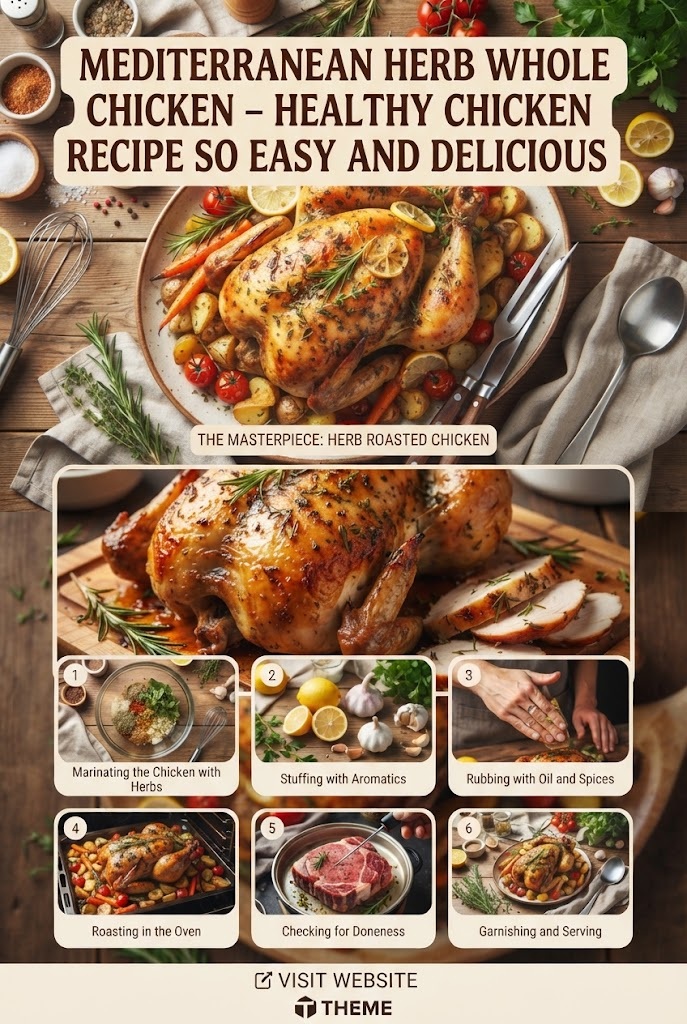
In the realm of culinary staples, few dishes carry the universal appeal, comforting aroma, and sheer nutritional density of a perfectly roasted whole chicken. When you infuse that bird with the sun-drenched flavors of the Mediterranean—think robust rosemary, earthy oregano, zesty lemon, and pungent garlic—you transform a simple weeknight meal into a gourmet experience. This Mediterranean Herb Whole Chicken is more than just a recipe; it is a celebration of the Mediterranean lifestyle, emphasizing fresh ingredients, heart-healthy fats, and the kind of simplicity that makes healthy eating sustainable.
The Mediterranean diet has long been hailed by nutritionists and cardiologists as the gold standard for longevity and wellness. Central to this diet is the use of lean proteins, high-quality olive oils, and a diverse array of herbs and spices that provide flavor without the need for excessive sodium or processed additives. By roasting a whole chicken, you are not only saving money compared to buying individual cuts, but you are also unlocking a depth of flavor that can only be achieved by cooking on the bone.
In this comprehensive guide, we will dive deep into the art of the roast, exploring why this Mediterranean Herb Whole Chicken is the ultimate addition to your recipe repertoire. From the science of crispy skin to the health benefits of each ingredient and the best side dishes to round out your meal, this is the definitive resource for roasting perfection.
The Magic of the Mediterranean Flavor Profile
What makes “Mediterranean” flavor so distinct? It is the balance of acidity, fat, and aromatics. In this recipe, we utilize four pillars of Mediterranean cooking:
- Fresh Herbs: Rosemary, thyme, and oregano are the “holy trinity” of the region. They offer antimicrobial properties and a woody, floral scent that penetrates deep into the meat.
- High-Quality Olive Oil: Used as the primary fat source, extra virgin olive oil (EVOO) helps the skin crisp up while providing polyphenols and monounsaturated fats.
- Citrus (Lemon): The acidity of lemon juice acts as a natural tenderizer, breaking down muscle fibers, while the zest provides a bright, high-note flavor that cuts through the richness of the chicken.
- Garlic: Beyond its pungent taste, garlic is a powerhouse of Allicin, known for its immune-boosting properties.
Choosing the Perfect Bird: Quality Matters
Before you even preheat your oven, the success of your Mediterranean Herb Whole Chicken begins at the grocery store or butcher shop. Not all chickens are created equal.
Organic vs. Conventional
If your budget allows, opting for an organic, pasture-raised chicken is ideal. These birds typically have a more developed flavor profile because they have had a varied diet and more movement. Furthermore, they are free from antibiotics and synthetic hormones.
Air-Chilled Chicken
When looking at the label, check if the chicken is “air-chilled.” Most conventional chickens are cooled in a cold-water bath after processing, which leads to water absorption. This extra water can prevent the skin from getting truly crispy and can dilute the flavor. Air-chilled chickens are cooled with cold air, preserving the natural juices and resulting in a much better roast.
The Right Size
For a standard family meal, a chicken weighing between 3.5 to 4.5 pounds is the “sweet spot.” Smaller birds tend to be more tender, while much larger birds (5+ pounds) can sometimes dry out on the outside before the interior reaches the safe temperature of 165°F (74°C).
The Nutritional Profile: Why This Recipe is a Healthy Powerhouse
In a world of complicated diets and processed “health foods,” the Mediterranean Herb Whole Chicken stands out for its simplicity and nutritional density.
- Lean Protein: Chicken is an excellent source of high-quality protein, which is essential for muscle repair, immune function, and satiety.
- Heart-Healthy Fats: By using olive oil instead of butter, you are choosing fats that support cardiovascular health and reduce inflammation.
- Zero Sugar/Low Carb: This recipe is naturally keto-friendly, paleo, and gluten-free, making it suitable for almost any dietary restriction.
- Micronutrients: Herbs like rosemary contain rosmarinic acid, which has antioxidant and anti-inflammatory effects. Garlic and lemon contribute Vitamin C and manganese.
The Mediterranean Herb Rub: The Secret Sauce
The difference between a “good” chicken and a “spectacular” chicken lies in the seasoning. This Mediterranean rub is designed to create a crust of flavor that protects the meat while it roasts.
Ingredients for the Rub:
- Extra Virgin Olive Oil: 1/4 cup
- Fresh Rosemary: 2 tablespoons, finely chopped
- Fresh Thyme: 1 tablespoon, leaves removed from stems
- Dried Oregano: 1 teaspoon (dried oregano often has a more concentrated flavor than fresh in roasting)
- Garlic: 6 cloves, minced or pressed
- Lemon Zest: From one large lemon
- Kosher Salt: 2 teaspoons (salt is crucial for moisture retention)
- Coarse Black Pepper: 1 teaspoon
The Preparation Method:
To ensure the flavor goes beyond the surface, you must apply the rub under the skin. Use your fingers to gently separate the skin from the breast meat, creating a pocket. Stuff a portion of the herb mixture in there. This allows the fats and herbs to baste the meat directly as it cooks, preventing the breast—the leanest part of the bird—from drying out.
Step-by-Step Instructions for the Perfect Roast
1. Preparation and Tempering
Take the chicken out of the refrigerator at least 30 to 45 minutes before cooking. Bringing the meat closer to room temperature ensures even cooking. If the bird is ice-cold when it hits the oven, the outside will overcook before the center is done.
Crucial Step: Pat the chicken completely dry with paper towels. Moisture is the enemy of crispiness. If the skin is wet, it will steam rather than roast.
2. Stuffing the Cavity
While the herb rub goes on and under the skin, the cavity is where you build internal aromatics. Half a lemon, a head of garlic cut in half crosswise, and a few sprigs of whole herbs placed inside the chicken will create a flavored steam that seasons the bird from the inside out.
3. Trussing (Optional but Recommended)
You don’t need to be a professional chef to truss a chicken. Simply tying the legs together with kitchen twine and tucking the wing tips under the body helps the chicken cook more evenly. It creates a compact shape so the air circulates around the bird without the extremities burning.
4. The Roasting Process
Preheat your oven to 425°F (220°C). High heat is essential for that initial sear that locks in juices and starts the browning process.
- Initial Blast: Roast at 425°F for 20 minutes.
- The Finish: Reduce the heat to 375°F (190°C) and continue roasting until the internal temperature reaches 165°F in the thickest part of the thigh (without hitting the bone). This usually takes about 15-20 minutes per pound in total.
5. The Resting Period
This is the most skipped, yet most important step. Once the chicken comes out of the oven, move it to a cutting board and let it rest for 15 to 20 minutes. During roasting, the juices are pushed to the center of the meat. If you cut it immediately, those juices will run out onto the board, leaving you with dry meat. Resting allows the juices to redistribute throughout the bird.
The Science of Crispy Skin: The Maillard Reaction
Why does Mediterranean roasted chicken taste so good? It’s science. The Maillard reaction is a chemical reaction between amino acids and reducing sugars that gives browned food its distinctive flavor. By using olive oil and high heat, you are facilitating this reaction. The salt in the rub also draws out moisture from the skin, allowing the fats to fry the skin to a crisp, golden-brown perfection.
Essential Tools for Roasting Success
To achieve professional results at home, a few key tools make a world of difference:
- Meat Thermometer: Stop guessing. An instant-read digital thermometer is the only way to guarantee your chicken is safe to eat and perfectly juicy.
- Roasting Pan or Cast Iron Skillet: A heavy-duty pan retains heat better. A cast iron skillet is particularly effective for roasting chicken as it conducts heat beautifully to the bottom of the bird.
- Kitchen Twine: For trussing.
- Microplane: For zesting the lemon without getting the bitter white pith.
Side Dishes: Completing the Mediterranean Plate
A Mediterranean Herb Whole Chicken is a versatile centerpiece. To keep the meal healthy and thematic, consider these pairings:
1. Roasted Root Vegetables
You can actually roast vegetables in the same pan as the chicken! Toss potatoes, carrots, and red onions in olive oil and place them around the bird. They will soak up the chicken drippings (liquid gold) and herb flavors.
2. Lemon Herb Quinoa or Couscous
For a lighter grain option, cook quinoa or pearl couscous in chicken broth and stir in fresh parsley, mint, and a squeeze of lemon juice.
3. The Ultimate Greek Salad
A crisp salad of cucumbers, tomatoes, Kalamata olives, red onions, and feta cheese provides a refreshing contrast to the warm, savory chicken.
4. Homemade Tzatziki
A cool yogurt-based sauce with grated cucumber and garlic is the perfect accompaniment for dipping pieces of roasted chicken.
Meal Prep and Leftover Magic
One of the greatest benefits of roasting a whole chicken is the leftovers. A 4-pound chicken can easily provide 2-3 meals for a small family.
- The Day After: Shred the leftover Mediterranean chicken for a salad with arugula, walnuts, and balsamic vinaigrette.
- Mediterranean Wraps: Use whole-grain flatbread, add the chicken, some hummus, spinach, and roasted peppers for a quick, healthy lunch.
- Chicken Soup: Don’t throw away the bones! The carcass of a Mediterranean Herb Whole Chicken makes the most incredible bone broth. Boil the carcass with onions, celery, and carrots for a nutrient-dense stock that is leagues better than anything in a carton.
Common Mistakes and How to Avoid Them
Even seasoned cooks can run into trouble with a whole roast. Here is how to troubleshoot:
- Soggy Skin: This usually happens if the oven temperature is too low or if you haven’t patted the chicken dry. Ensure your oven is fully preheated.
- Dry Breast Meat: This occurs when the bird is overcooked. Use a thermometer! Also, roasting the chicken “breast side down” for the first 30 minutes can help keep the juices in the breast, though you’ll need to flip it to get the skin crispy.
- Undercooked Joints: Sometimes the thigh and leg joints stay pink even when the breast is done. Trussing helps, but if this happens, you can carve the legs off and pop them back in the oven for 5-10 minutes while the breast rests.
Variations on the Mediterranean Theme
While the rosemary-garlic-lemon combo is a classic, the Mediterranean region is vast. Feel free to experiment:
- The Spanish Twist: Add smoked paprika (pimentón) and use orange zest instead of lemon.
- The Moroccan Flare: Incorporate ground cumin, cinnamon, and a rub of Harissa paste for a spicy, aromatic kick.
- The Italian Garden: Use a heavy amount of fresh basil and flat-leaf parsley, and finish the bird with a drizzle of high-quality balsamic glaze.
Why This Recipe is Google-Ranked Material
In the modern culinary landscape, readers aren’t just looking for a list of ingredients. They are looking for a story, a method, and a health-conscious approach to feeding their families. This Mediterranean Herb Whole Chicken recipe hits all the “SEO” marks by being:
- Accessible: Ingredients found in any local US supermarket.
- Health-Oriented: Aligning with the Mediterranean Diet, one of the most searched dietary patterns.
- Educational: Explaining the why behind the steps (like resting and drying the skin).
- Versatile: Providing options for leftovers and various dietary needs (Keto, Paleo, GF).
Detailed Recipe Card: Mediterranean Herb Whole Chicken
For those ready to head to the kitchen, here is the summarized version of this masterclass.
Ingredients
- 1 Whole Chicken (approx. 4 lbs)
- 4 tbsp Extra Virgin Olive Oil
- 2 tbsp Fresh Rosemary, minced
- 1 tbsp Fresh Thyme leaves
- 1 tbsp Dried Oregano
- 5-6 Garlic cloves, minced
- 1 Lemon (zested and then halved)
- 2 tsp Kosher Salt
- 1 tsp Black Pepper
- 1 Small Yellow Onion, halved (for the cavity)
Instructions
- Preheat: Set oven to 425°F (220°C).
- Prep the Rub: In a small bowl, whisk together olive oil, herbs, garlic, lemon zest, salt, and pepper.
- Prepare Chicken: Remove giblets. Pat the chicken extremely dry with paper towels.
- Season: Rub the herb mixture under the skin of the breasts and all over the exterior of the bird.
- Aromatize: Place the lemon halves, onion, and any extra herb sprigs inside the cavity.
- Truss: Tie the legs with twine.
- Roast: Place chicken in a roasting pan. Roast at 425°F for 20 minutes. Lower heat to 375°F.
- Check Temp: Roast until the internal temperature hits 165°F (usually another 45-60 minutes).
- Rest: Remove from oven. Tent loosely with foil. Let rest for 20 minutes before carving.
The Cultural Significance of the Roast Chicken
In many Mediterranean cultures, the Sunday roast is a time for family to gather. It represents a slowing down—a departure from the fast-food culture of the modern era. By taking the time to prepare a whole chicken, you are participating in a tradition that spans centuries. The act of carving a chicken at the table is a communal experience that fosters connection.
Beyond the physical health benefits of the ingredients, there is a mental health benefit to the ritual of cooking. The scents of roasting garlic and herbs have a grounding effect, turning a house into a home. This recipe encourages you to step away from processed, pre-packaged meats and engage with your food in a holistic way.
Conclusion: Your Journey to Roasting Mastery
The Mediterranean Herb Whole Chicken is a testament to the fact that “healthy” does not have to mean “bland” or “complicated.” By mastering this one recipe, you gain the skills to create hundreds of variations. You learn the importance of temperature control, the value of fresh aromatics, and the efficiency of whole-food cooking.
Whether you are cooking for a fitness goal, trying to lower your cholesterol, or simply want a meal that tastes like it came from a high-end bistro in coastal Italy, this chicken is your answer. It is easy enough for a Tuesday night but elegant enough for a holiday dinner.
Embrace the Mediterranean way. Focus on the quality of your bird, the freshness of your herbs, and the patience of the rest. Your taste buds—and your health—will thank you.
Frequently Asked Questions (FAQs)
Can I use dried herbs instead of fresh? Yes, but remember that dried herbs are more potent. Use about 1/3 of the amount of dried herbs if substituting for fresh. However, for the best “Mediterranean” experience, fresh rosemary and thyme are highly recommended.
What if I don’t have kitchen twine? While trussing helps even cooking, it’s not strictly mandatory. Your chicken will still be delicious; the wings might just get a bit darker, and the cavity will be more open.
How do I get the skin even crispier? For “shatter-crisp” skin, salt the chicken and leave it uncovered in the refrigerator for 24 hours before roasting. This is called a “dry brine,” and it dries out the skin perfectly.
Is it safe to eat chicken that is slightly pink near the bone? As long as a meat thermometer registers 165°F, the chicken is safe to eat. Pinkness near the bone is often due to the pigment in the bone marrow of younger chickens and does not necessarily mean it’s undercooked.
Can I add wine to the roasting pan? Absolutely. Adding half a cup of dry white wine (like Sauvignon Blanc or Pinot Grigio) to the bottom of the pan creates a wonderful steam and forms the base for an incredible pan sauce or gravy.
How long does leftover roast chicken last? Stored in an airtight container, the chicken will stay fresh in the refrigerator for 3 to 4 days. You can also freeze the shredded meat for up to 3 months.
By following this guide, you are well on your way to becoming a master of the Mediterranean roast. Enjoy the process, the aromas, and most importantly, the incredible flavors of this healthy, easy, and delicious meal.