
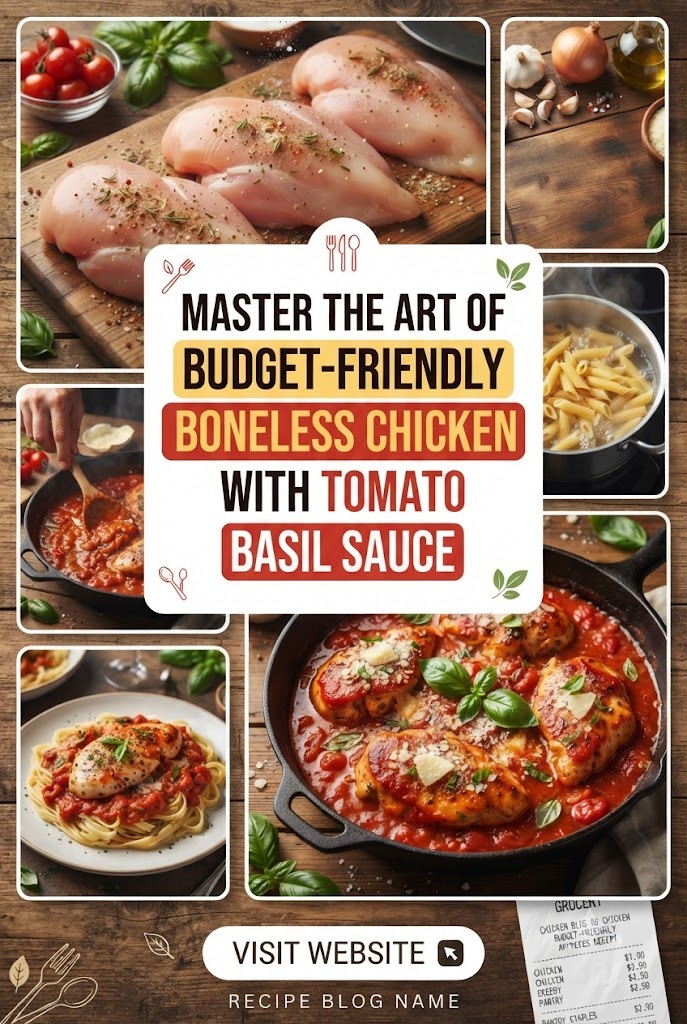
In an era where grocery receipts seem to grow longer while the bags grow lighter, the quest for a meal that balances cost-effectiveness with restaurant-quality flavor has become the ultimate culinary challenge. Many believe that “budget-friendly” is synonymous with “bland” or “boring.” However, the truth is that some of the world’s most iconic dishes—from Italian ragus to French stews—were born out of the necessity to make simple, inexpensive ingredients sing.
Enter the Boneless Chicken with Tomato Basil Sauce. This dish is a powerhouse of nutrition, flavor, and economy. It utilizes accessible staples, requires minimal equipment, and delivers a sophisticated profile that belies its modest price tag. Whether you are a college student navigating a tight budget, a busy parent looking for a weeknight win, or a food enthusiast trying to cut down on dining-out expenses, this guide will provide everything you need to master this timeless classic.
The Philosophy of Budget Cooking: Why This Dish Works
Before we dive into the pans and salt, it is essential to understand why this specific combination of chicken, tomato, and basil is a budget-cook’s best friend.
- Protein Versatility: Boneless chicken (whether breast or thigh) is one of the most cost-effective proteins in the United States. It absorbs flavors like a sponge, making it the perfect canvas for a robust sauce.
- Pantry Staples: Canned tomatoes and dried herbs are incredibly shelf-stable and cheap. When treated with the right techniques, they can mimic the brightness of fresh produce at a fraction of the cost.
- The “Aroma” Factor: Basil, even in small amounts, provides an olfactory experience that makes a $5 meal feel like a $25 bistro plate.
- One-Pan Efficiency: This recipe is designed for a single skillet. This means less water used for cleaning, less energy used for cooking, and more time saved.
Sourcing Your Ingredients: How to Save More
To truly make this a budget-friendly masterpiece, you need to know how to shop. Not all chicken is priced equally, and not all canned tomatoes are created the same.
The Chicken Debate: Breasts vs. Thighs
- Boneless Skinless Chicken Breasts: These are often on sale in “Family Packs.” They are lean and high in protein. To keep them from drying out (a common budget-cooking pitfall), we use a searing-then-simmering technique.
- Boneless Skinless Chicken Thighs: Often slightly cheaper or equal in price to breasts, thighs contain more fat, which translates to more flavor and a more forgiving texture. They are almost impossible to overcook, making them ideal for beginners.
- Pro Tip: Look for “Manager’s Specials” at your local grocery store. Chicken that is 1-2 days from its “sell-by” date is perfectly safe to cook immediately or freeze, and often comes with a 30-50% discount.
The Tomato Component
- Canned Tomatoes: For this recipe, crushed tomatoes or tomato sauce (the plain canned kind, not the pre-seasoned jarred pasta sauce) work best. Store brands are often identical in quality to name brands.
- Fresh Tomatoes: Only use fresh if they are in season and on sale. Off-season fresh tomatoes are watery and expensive; canned tomatoes are picked and packed at peak ripeness.
The Herb Factor
- Fresh Basil: If you have a windowsill, buy a $3 basil plant instead of a $4 plastic clamshell of cut leaves. The plant will provide basil for months.
- Dried Basil: If fresh isn’t an option, dried basil is fine, but you must add it early in the cooking process to allow the oils to rehydrate.
The Master Recipe: Budget-Friendly Tomato Basil Chicken
This recipe serves four people and can be scaled up or down easily.
Ingredients List
- 1.5 lbs Boneless, skinless chicken (breasts or thighs)
- 1 can (28 oz) Crushed tomatoes or tomato purée
- 3-4 cloves Garlic, minced (or 1 tsp garlic powder)
- 1 small Yellow onion, finely diced
- 2 tbsp Cooking oil (vegetable, canola, or a light olive oil)
- 1 tsp Dried oregano
- 1/2 tsp Sugar (to balance the tomato acidity)
- Salt and Black Pepper to taste
- Handful of Fresh Basil (chopped) or 1 tbsp dried basil
- Optional: Red pepper flakes for heat
Step-by-Step Instructions
1. Preparation and Seasoning
Pat the chicken dry with paper towels. This is a crucial, often skipped step. Moisture on the surface of the meat creates steam, which prevents browning. Season both sides generously with salt and pepper. If the chicken breasts are very thick, slice them in half horizontally (butterfly them) to ensure even cooking and to stretch the portions further.
2. The Perfect Sear
Heat your oil in a large skillet over medium-high heat. Once the oil is shimmering, add the chicken. Do not crowd the pan; cook in two batches if necessary. Let the chicken sit undisturbed for 4-5 minutes until a golden-brown crust forms. Flip and cook for another 3 minutes. The chicken doesn’t need to be fully cooked through at this stage; we are looking for color and flavor (the Maillard reaction). Remove the chicken and set it aside on a plate.
3. Building the Aromatics
In the same pan, reduce the heat to medium. Add the diced onion. The moisture from the onion will help “deglaze” the pan, picking up all the brown bits (fond) left behind by the chicken. Sauté for 3-4 minutes until translucent. Add the minced garlic and cook for just 60 seconds until fragrant. If using red pepper flakes or dried herbs, add them now so the heat can release their oils.
4. The Sauce Base
Pour in the canned tomatoes. Use a splash of water or broth to rinse out the can and add it to the pan—never waste flavor! Stir in the sugar, oregano, and salt. Bring the mixture to a gentle simmer.
5. The Marriage of Flavors
Place the chicken (and any juices that collected on the plate) back into the sauce. Submerge the pieces slightly. Lower the heat to medium-low, cover the pan, and simmer for 10-15 minutes. This slow finish ensures the chicken stays juicy while the sauce thickens and absorbs the meat’s savory essence.
6. The Finishing Touch
Turn off the heat. Stir in the fresh basil. The residual heat will wilt the leaves and release that signature peppery-sweet aroma without turning the herbs bitter. Taste one last time and adjust salt if needed.
The Science of Flavor: Why Tomato and Basil?
Understanding why this dish works will help you become a more intuitive cook. The pairing of tomato and basil is a classic example of culinary synergy.
Tomatoes are naturally high in glutamate, the compound responsible for “umami” or savory taste. When you cook tomatoes down, these flavors concentrate. Chicken also provides umami. By combining them, you create a depth of flavor that usually requires hours of simmering or expensive ingredients.
Basil contains a compound called linalool, which provides a floral and citrusy bridge to the acidity of the tomatoes. The small amount of sugar added to the sauce isn’t to make it sweet; it’s to counteract the metallic “tinny” taste sometimes found in budget canned tomatoes and to balance the pH level on your palate.
Culinary Techniques to Elevate Budget Ingredients
To make a $10 meal taste like a $40 meal, you must master a few simple techniques.
1. Deglazing
When meat is seared, it leaves behind caramelized proteins and sugars on the bottom of the pan. This is culinary gold. When you add onions or liquid to the hot pan and scrape those bits up, you are incorporating a complex, smoky depth into your sauce that no store-bought jar can replicate.
2. Reduction
If your sauce feels too watery, let it simmer uncovered for an extra five minutes. Reducing the liquid concentrates the sugars and salts, resulting in a “velvety” mouthfeel.
3. Proper Resting
Even though the chicken is in a sauce, it still benefits from a “rest” period. Letting the dish sit for 5 minutes after turning off the heat allows the fibers of the meat to relax and reabsorb the sauce.
Budget Variations: Keeping it Fresh
One of the best things about this recipe is its adaptability. You can change the profile based on what is in your pantry.
- The Creamy Version: Stir in 1/4 cup of heavy cream, half-and-half, or even plain Greek yogurt at the very end for a “Pink Sauce” or “Vodka-style” sauce without the vodka.
- The Veggie Boost: Add diced bell peppers, zucchini, or spinach to the sauce. This “bulks out” the meal, making the chicken stretch to 6 servings instead of 4.
- The Spicy Kick: Increase the red pepper flakes and add a teaspoon of smoked paprika to create a “Fra Diavolo” style chicken.
- The Cheesy Finish: If you have some leftover Parmesan or Mozzarella, sprinkle it over the chicken in the last 2 minutes of cooking and cover the pan until melted.
Pairing Recommendations: What to Serve with Your Chicken
To keep the meal budget-friendly, choose sides that are high in volume and low in cost.
1. Pasta (The Classic Choice)
A 99-cent box of spaghetti or penne is the traditional partner for this dish. The sauce clings beautifully to the noodles. Pro tip: reserve 1/4 cup of the pasta cooking water and stir it into your tomato sauce to help it emulsify and stick to the pasta.
2. Rice or Quinoa
If you want a gluten-free option, white or brown rice is incredibly cheap when bought in bulk. The rice acts as a sponge for the tomato basil sauce.
3. Crusty Bread
Sometimes, all you need is a loaf of French bread (often $1.50 at the bakery) to “scarpetta”—the Italian art of mopping up every last drop of sauce from the plate.
4. Roasted Potatoes
If you want a heartier, more “American-style” dinner, cube some russet potatoes, toss them in oil and salt, and roast them until crispy while the chicken simmers.
Meal Prepping and Storage
This recipe is a meal-prepper’s dream. Unlike steak or delicate fish, tomato-based chicken dishes actually taste better the next day as the flavors have more time to meld.
- Fridge: Store in an airtight container for up to 4 days.
- Freezer: This dish freezes exceptionally well. Place it in a freezer-safe bag or container for up to 3 months. To reheat, let it thaw in the fridge overnight and warm it gently on the stove with a splash of water.
- Work Lunch Tip: If taking this for lunch, pack the sauce and chicken separately from the pasta or rice if possible, to prevent the starch from getting mushy. Or, embrace the “casserole” feel and mix them together!
Nutritional Profile: Healthy on a Budget
Eating cheap shouldn’t mean eating poorly. This dish is naturally balanced:
- High Protein: Essential for muscle repair and satiety.
- Lycopene: Found in cooked tomatoes, this is a powerful antioxidant linked to heart health.
- Low Calorie: By using boneless, skinless cuts and controlling the oil, this dish remains heart-healthy and waistline-friendly.
- Vitamin C and K: Provided by the basil and tomato base.
Common Pitfalls and How to Avoid Them
Even with a simple recipe, things can go wrong. Here is how to troubleshoot:
- The Chicken is Tough: You likely overcooked it during the searing phase. Remember, the searing is for color, not for cooking through. The simmering phase is where the chicken becomes tender.
- The Sauce is Too Acidic: This happens with lower-quality canned tomatoes. Add another pinch of sugar or a teaspoon of butter to mellow it out.
- The Garlic Burnt: Garlic burns very quickly and becomes bitter. Always add it after the onions have already softened and released their moisture.
- The Sauce is Too Thin: Simmer it uncovered for a few more minutes. The steam escaping means the sauce is thickening.
The Economic Impact of Home Cooking
To put this in perspective, let’s look at the “Mathematics of Dinner” in the USA.
- Ordering Italian Takeout: $18 – $25 per person.
- Mid-range Sit-down Restaurant: $22 – $30 per person.
- This Home-Cooked Meal: Approximately $2.50 – $3.50 per person.
Over the course of a year, swapping just one “takeout night” for this Budget-Friendly Tomato Basil Chicken could save an individual over $1,000. For a family of four, the savings are astronomical.
Final Thoughts: Redefining the Budget Table
Cooking on a budget is not about sacrifice; it is about strategy. It is about knowing that a simple can of tomatoes and a humble piece of chicken can be transformed into a meal that feels like a celebration.
The Boneless Chicken with Tomato Basil Sauce is more than just a recipe; it is a fundamental skill. Once you master the sear of the meat, the softening of the aromatics, and the balancing of the sauce, you have the blueprint for hundreds of other dishes. You can swap basil for cilantro and lime for a Mexican twist, or use soy sauce and ginger for an Asian-inspired simmer.
But for today, stick to the classic. Feel the warmth of the steam as the tomatoes hit the pan, smell the intoxicating scent of fresh basil hitting the hot sauce, and enjoy a gourmet experience that respects both your palate and your wallet. Good food doesn’t have to be expensive—it just has to be made with a bit of knowledge and a lot of heart.
Quick Shopping List Summary for Your Next Trip:
- Chicken: Look for family packs of breasts or thighs.
- Produce: Onions, garlic, and a basil plant.
- Aisle 4: Large can of crushed tomatoes, dried oregano.
- Aisle 7: A box of your favorite pasta shape.
Now, head to the kitchen and prove that budget-friendly cooking truly works.