
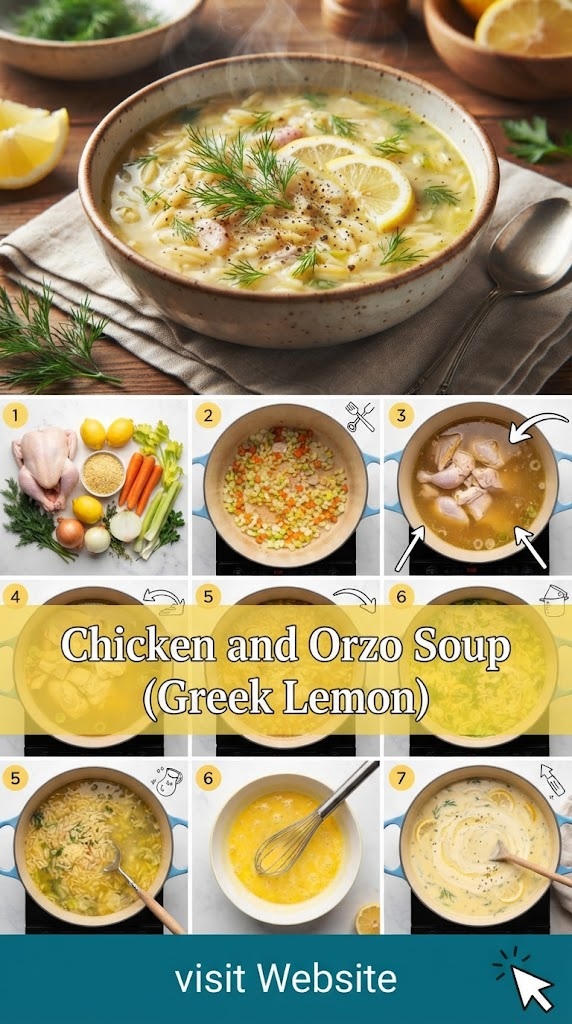
- Discover the secrets to making the perfect Greek Lemon Chicken and Orzo Soup (Avgolemono). A comprehensive guide covering history, professional techniques, and healthy variations.
In the pantheon of comfort foods, few dishes command as much respect and affection as the traditional Greek Lemon Chicken and Orzo Soup, known authentically as Avgolemono. To the uninitiated, it is a silky, citrusy, and deeply savory soup that feels like a warm hug in a bowl. To the Greek diaspora and culinary enthusiasts worldwide, it is a masterpiece of minimalist cooking where the humble egg and lemon transform a simple broth into a luxurious, velvet-textured elixir.
Whether you are battling a cold, looking for a light yet satisfying dinner, or wanting to master a classic Mediterranean technique, this guide will provide everything you need to know about crafting the ultimate Chicken and Orzo Soup.
The Heart of Greek Cuisine: What is Avgolemono?
The name “Avgolemono” (pronounced av-go-le-mo-no) literally translates to “egg-lemon.” While we often associate the term with this specific chicken soup, Avgolemono is actually a foundational sauce in Greek gastronomy. It is used to thicken stews, coat dolmades (stuffed grape leaves), and dress vegetables or fish.
What makes this soup unique is the absence of heavy cream or flour-based thickeners (roux). Instead, it relies on the emulsification of whole eggs (or just yolks) with fresh lemon juice. When tempered into a hot chicken broth, the eggs cook gently, creating a creamy, opaque consistency that is incredibly light yet decadent.
A Brief History
Though synonymous with Greece, the technique of using eggs and citrus to thicken sauces likely has Sephardic Jewish roots. After the expulsion of Jews from Spain in 1492, many settled in the Ottoman Empire, bringing with them a sauce called agristada, which used verjuice or bitter orange. Over time, lemons became the acid of choice in the Mediterranean, and the Greeks perfected the version we know and love today.
Why You’ll Fall in Love with This Soup
- Complexity from Simplicity: With fewer than ten main ingredients, the flavors are bright, clean, and sophisticated.
- Nutritional Powerhouse: Packed with lean protein, hydrating broth, and Vitamin C, it’s often called “Greek Penicillin.”
- The Texture: The orzo pasta (kritharaki) provides a wonderful “chew” that contrasts perfectly with the silky liquid.
- Year-Round Appeal: While it’s a winter staple, the zingy lemon makes it light enough for a spring or summer lunch.
Anatomy of the Perfect Chicken and Orzo Soup
To achieve restaurant-quality results at home, you must understand the role of each component.
1. The Chicken
For the most authentic flavor, a whole poached chicken is preferred. This provides both the meat and a rich, gelatinous stock. However, for a weeknight version, bone-in chicken breasts or thighs work beautifully.
- Pro Tip: Always sear the skin first if using pieces to render a bit of fat, which adds depth to the broth.
2. The Orzo
Orzo is a rice-shaped pasta that is traditional in many Greek households. It releases just enough starch to help thicken the soup further.
- Substitution: Traditionalists sometimes use Arborio rice. For a gluten-free version, cauliflower rice or a gluten-free orzo can be substituted.
3. The Lemons
Freshness is non-negotiable. Do not use bottled lemon juice. You need the aromatic oils from the zest and the sharp acidity of freshly squeezed juice to cut through the richness of the egg.
4. The Eggs
The eggs act as the bridge between the broth and the lemon. Using room-temperature eggs helps prevent curdling during the tempering process. Some chefs prefer using only yolks for a richer yellow color, but using whole eggs provides a lighter, fluffier texture.
The Master Recipe: Traditional Greek Avgolemono
Ingredients
For the Broth and Chicken:
- 1 whole chicken (approx. 3-4 lbs) or 2 lbs of bone-in chicken thighs
- 2 large carrots, peeled and halved
- 2 stalks of celery, halved
- 1 large yellow onion, quartered
- 2 bay leaves
- 10-12 cups of water
- 1 tablespoon sea salt (plus more to taste)
- 1 teaspoon black peppercorns
For the Soup Base:
- 1 cup orzo pasta
- Salt and white pepper to taste
For the Avgolemono Sauce:
- 3 large eggs (room temperature)
- Juice of 2-3 large lemons (approx. 1/2 to 2/3 cup)
- 1 tablespoon of cold water
For Garnish:
- Fresh dill (essential for that authentic Greek aroma)
- Freshly cracked black pepper
- A drizzle of extra virgin olive oil
Step-by-Step Instructions
Step 1: Prepare the Rich Broth
Place the chicken, carrots, celery, onion, bay leaves, salt, and peppercorns in a large Dutch oven or stockpot. Cover with water. Bring to a boil, then immediately reduce to a low simmer. Skim off any foam that rises to the top. Simmer for 45–60 minutes until the chicken is falling off the bone.
Step 2: Shred and Strain
Remove the chicken and vegetables from the pot. Strain the broth through a fine-mesh sieve into a clean pot to ensure a crystal-clear liquid. Discard the boiled vegetables. Once the chicken is cool enough to handle, shred the meat into bite-sized pieces, discarding the skin and bones.
Step 3: Cook the Orzo
Bring the strained broth back to a boil. Add the orzo and cook until al dente (usually 8-10 minutes). Do not overcook, as the pasta will continue to soften in the hot soup. Once cooked, reduce the heat to the lowest setting. The soup must not be boiling when you add the egg mixture.
Step 4: The Egg-Lemon Alchemy (The Tempering)
This is the most critical stage.
- Whisk the Eggs: In a medium bowl, whisk the eggs vigorously until they are frothy and doubled in volume. You can use a hand mixer for an extra airy texture.
- Add Lemon: Slowly pour in the lemon juice and a tablespoon of cold water while continuing to whisk.
- Temper: This prevents the eggs from scrambling. Take a ladleful of the hot soup broth (just the liquid) and, in a slow, steady stream, whisk it into the egg-lemon mixture. Repeat with 2-3 more ladles of broth. The egg mixture should now be quite warm.
Step 5: Combine
Slowly pour the tempered egg mixture back into the main pot of soup, stirring constantly. You will see the soup instantly transform into a creamy, pale yellow masterpiece.
Step 6: Final Touch
Add the shredded chicken back into the pot. Heat gently for 1-2 minutes—do not let it boil, or the eggs will curdle. Season with salt and white pepper.
Expert Tips for Success
1. Temperature Control
The enemy of Avgolemono is high heat. Once the eggs are added, the soup should never reach a boil. If you need to reheat it later, do so over very low heat, stirring frequently.
2. The Whisking Technique
The frothier your eggs, the lighter your soup. In many Greek villages, the “beating of the eggs” is a rhythmic, almost meditative process. If you want a very thick soup, use an extra egg yolk.
3. Balancing the Acid
Lemon sizes and acidity levels vary. Start with the juice of two lemons, taste, and add more if you want that signature “zing.” The soup should be perceptibly tart but balanced by the savory chicken fat.
4. Preventing “Thirsty” Orzo
Orzo acts like a sponge. If you leave the soup in the fridge overnight, the pasta will absorb much of the broth. When reheating, you may need to add a splash of water or extra chicken stock to loosen it up.
Variations and Modern Twists
While the traditional recipe is hard to beat, modern kitchens often call for adaptations.
The Instant Pot Version
For those short on time, you can make a “dump and start” version.
- Sauté onions and garlic in the Instant Pot.
- Add chicken breasts, broth, and orzo.
- Pressure cook for 8 minutes, followed by a quick release.
- Shred the chicken, then perform the tempering step (Step 4 above) using the “Sauté” function on the lowest setting.
Vegetarian “Avgolemono”
You can achieve a similar flavor profile using vegetable broth and replacing chicken with chickpeas or sautéed mushrooms. The egg-lemon sauce remains the same, providing that classic texture.
Low-Carb/Keto Adaptation
Substitute the orzo with cauliflower rice or konjac noodles. Because cauliflower rice doesn’t release much starch, you might want to use 4 eggs instead of 3 to ensure the soup has enough body.
The “Velouté” Method
Some modern chefs whisk a teaspoon of cornstarch into the lemon juice before mixing it with the eggs. This provides an “insurance policy” against curdling, making the sauce more stable if it accidentally gets too hot.
Health Benefits: Why It’s Good for You
The Mediterranean Diet is world-renowned for its health benefits, and this soup is a prime example of why.
- Immune Support: The high concentration of Vitamin C from fresh lemons stimulates white blood cell production.
- Digestive Ease: The combination of ginger (an optional addition) and lemon can soothe the digestive tract. The broth is also rich in collagen if made from scratch.
- Lean Protein: Chicken provides essential amino acids without the heavy saturated fats found in red meat.
- Hydration: The high water content and electrolytes from the salt and vegetables make it an ideal recovery food.
Pairing Suggestions: Making it a Meal
While Chicken and Orzo Soup is a complete meal on its own, you can elevate the experience with these sides:
- Crusty Sourdough or Pita: Perfect for mopping up every last drop of the creamy broth.
- Greek Salad (Horiatiki): A crisp salad of cucumbers, tomatoes, olives, and feta provides a cold, crunchy contrast to the warm soup.
- Roasted Vegetables: Asparagus or broccoli with a hint of garlic and oregano complements the lemon profile beautifully.
- Wine Pairing: A crisp, high-acidity white wine like a Greek Assyrtiko or a Sauvignon Blanc pairs perfectly with the citrus notes.
Storage and Reheating Instructions
Storage: Store in an airtight container in the refrigerator for up to 3-4 days.
Freezing: This soup does not freeze particularly well. The egg-lemon emulsion tends to separate and change texture when thawed, and the orzo can become mushy. It is best enjoyed fresh.
Reheating: As mentioned, avoid the microwave if possible. Reheat on the stove over low-medium heat. If the soup has thickened too much into a porridge-like consistency, whisk in a 1/4 cup of chicken broth or water to restore the silky texture.
Frequently Asked Questions (FAQs)
1. Can I use rice instead of orzo?
Absolutely. Short-grain rice like Arborio is traditional in many regions of Greece. It creates an even creamier soup due to the high starch content of the rice.
2. My soup curdled! Can I fix it?
If the eggs scramble, the taste will still be fine, but the texture will be “lumpy.” You can try to save it by pouring the soup through a blender or using an immersion blender to re-emulsify the eggs, though this will break down your shredded chicken and orzo.
3. Is Avgolemono dairy-free?
Yes! One of the most surprising things about this soup is that it contains no cream or butter. The “creaminess” comes entirely from the eggs.
4. Why is my soup not yellow?
The color depends largely on the quality of your eggs. For that vibrant, golden-yellow hue, use pasture-raised eggs with deep orange yolks.
5. Can I use leftover rotisserie chicken?
Yes. This is a fantastic way to save time. Simply simmer the rotisserie chicken bones with aromatics to make a quick stock, strain, add the orzo, and then stir in the shredded meat at the end.
Conclusion: A Masterpiece in a Bowl
The Greek Lemon Chicken and Orzo Soup is more than just a recipe; it is a lesson in culinary balance. It teaches the importance of technique—specifically the art of the temper—and proves that you don’t need a long list of expensive ingredients to create something truly luxurious.
By following this guide, you aren’t just making a meal; you are bringing a piece of Aegean history into your kitchen. So grab the freshest lemons you can find, take your time whisking those eggs, and prepare to experience the bright, comforting magic of Avgolemono.
Kali Orexi! (Bon Appétit!)